
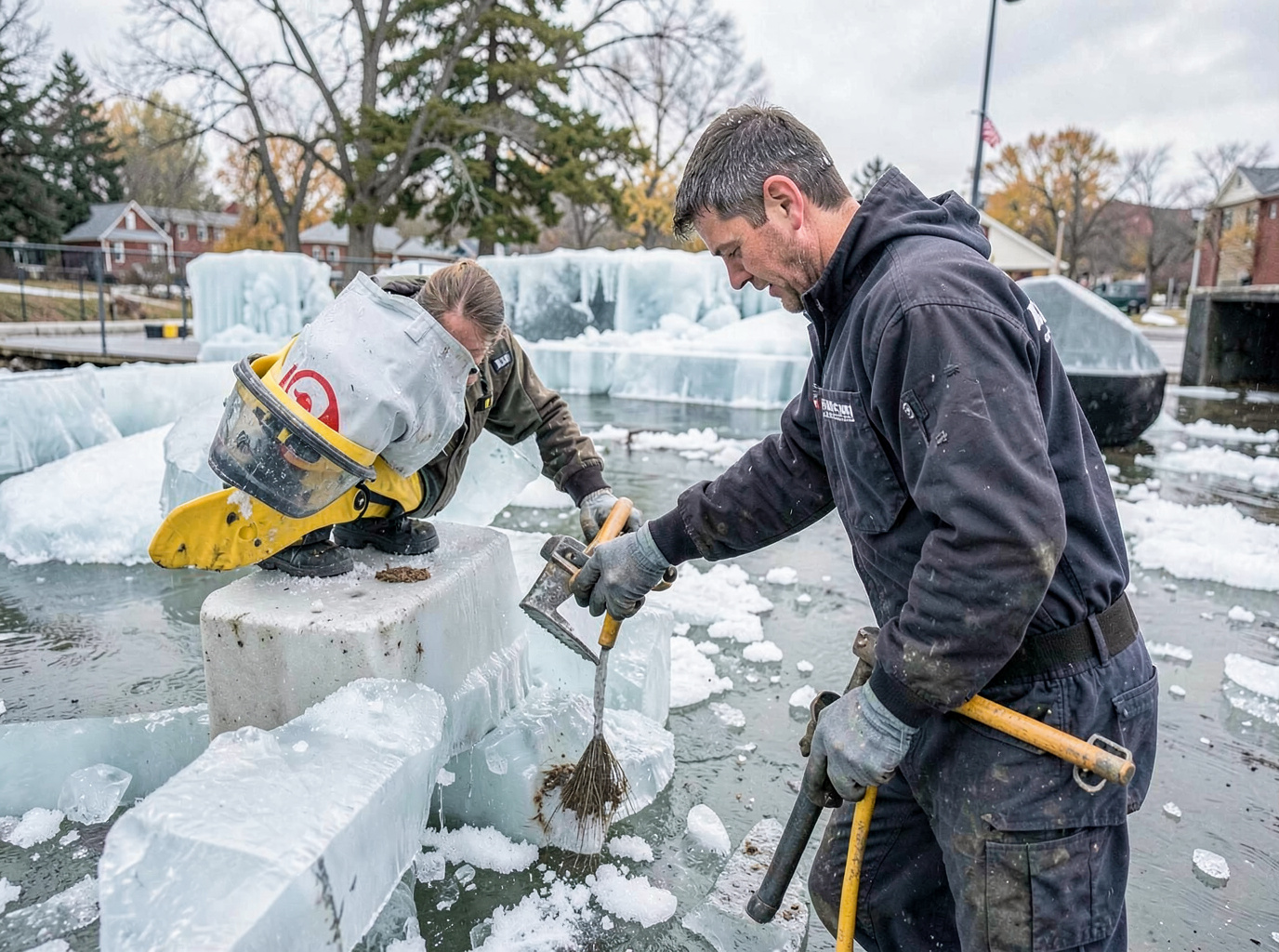
Brighton sits just south of the city line, and the attics we open here tell a Monroe County story: 1920s–1950s colonials and capes along Winton, Elmwood, and the Twelve Corners grid that were never designed for today’s sealed envelopes. Cold snowy winters drive ice dams along the eaves; once meltwater backs up under the shingles, the plywood and insulation stay damp for weeks. We work those roofs from our shop at 1925 S Clinton Ave, a short run into 14610, so we can get into tight hatchways before the next lake-effect dump.
Most Brighton lots are modest, with driveways that pinch between mature maples and the house. That means ladders go up the gable end rather than the street side, and we stage containment so neighbors on French Road or Monroe Avenue still have a path. Humid continental swings also leave attics sweating when the furnace kicks on after a January thaw; we treat the mold, then talk ventilation so the same bay doesn’t bloom again by March.
Park Avenue and East Avenue stock is older still, but Brighton’s mix of post-war ranches near Corbett’s Glen adds its own quirk: low-pitch roofs and knee-wall storage that trap moist air. We schedule around school drop-off at Brighton High and the Saturday market rush, keeping hours Mon–Fri 8am–6pm and Sat 9am–2pm so the job finishes before the next storm.
Around Brighton
We regularly work near:
- 📍Corbett's Glen Nature Park
- 📍Twelve Corners
- 📍Brighton High School
- 📍Meridian Centre Park
- 📍Monroe Avenue
Attic Mold Removal in Brighton — Local Notes
- •Ice dams are the main attic-mold trigger on Brighton’s older colonials; snow sits on the north slopes facing Meridian Centre Park until a thaw, then water soaks the sheathing.
- •Many 14610 homes have only a 16-by-20 hatch in a closet, so we use compact HEPA gear and work in sections rather than tearing out whole bays.
- •Mature street trees along Elmwood drop leaves into gutters; clogged downspouts keep the fascia wet and feed mold at the eaves we see every spring.
- •Low-slope ranches near Corbett’s Glen hold condensation longer after a January thaw because there is almost no ridge vent—we add baffles while we clean.