
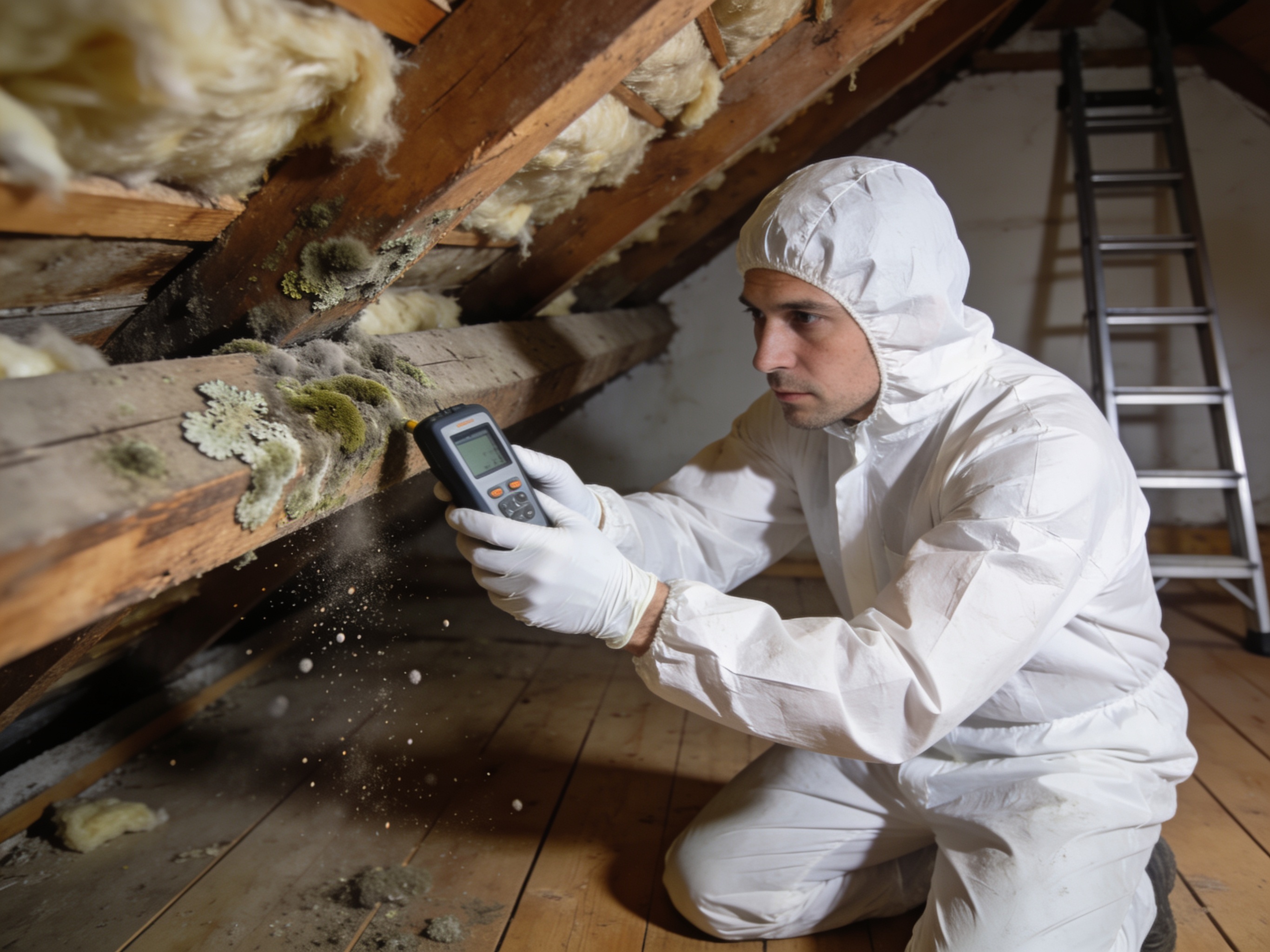
Older housing stock along East Avenue and in Charlotte often has attics built before modern vapor barriers and balanced ventilation were standard. In Monroe County’s humid continental climate, cold snowy winters drive ice dams on roofs and condensation on the underside of roof sheathing once temperatures drop. We inspect those spaces for hidden mold on rafters, around chimneys, and at poorly sealed penetrations rather than relying on a quick flashlight glance. Homes near the Rochester Public Market or George Eastman Museum frequently show the same pattern: decades of freeze-thaw cycles plus summer humidity that never fully dries the wood. A proper inspection documents moisture sources, insulation gaps, and whether the mold is surface-level or has reached structural members so you know the real scope before any removal work starts.
Attic access in Park Avenue Victorians and similar Monroe County houses is rarely straightforward. Hatch sizes, blown-in insulation depth, and knob-and-tube remnants change how we move and what we can safely see. We look for staining on the roof deck, musty odor that intensifies after a thaw, and elevated humidity readings that persist even when outdoor air is dry. Nearby Brighton and Pittsford properties share the same winter snow load and spring melt that push moisture into attics if soffit vents are blocked by insulation or debris. The inspection also flags whether bathroom or kitchen exhaust fans terminate in the attic instead of outdoors—an extremely common local shortcut that feeds mold year after year. Findings are explained in plain language with photos so you can decide next steps without guesswork.
We schedule inspections Monday through Friday 8am–6pm and Saturday 9am–2pm from our base at 1925 S Clinton Ave. That window lets us catch attics after overnight freezes or daytime melt when condensation is most visible. Terrain around High Falls and the river valley can mean slightly different wind-driven snow patterns than inland Pittsford, so we note roof orientation and prevailing weather exposure. No two attics are identical; a ranch in Irondequoit may need a different approach than a two-story on East Avenue. The goal is an honest picture of current conditions and the factors that will keep mold returning if they are not addressed.
Technician insight
In Rochester the thing that catches most people out with attic mold inspection is assuming the problem is only on the roof deck. After a snowy winter the real driver is often bathroom fans dumping into the attic plus soffits packed with insulation, so the wood never dries. I see it constantly in Charlotte and East Avenue houses that look fine from the street.
Ice-dam staining in a Charlotte bungalow
Homeowner noticed a musty smell after several freeze-thaw cycles. We found dark staining along the north roof deck and insulation pushed over the soffits. Moisture readings were still elevated even though the roof looked intact from outside. We documented the blocked ventilation and fan termination, then the owner scheduled targeted cleaning and venting so the space could dry.
Attic Mold Inspection Services We Offer
✓Visual Attic Mold Survey
Full walkthrough of accessible attic space to locate visible growth, staining, and moisture entry points common in Rochester-area older homes.
✓Moisture Mapping and Humidity Check
Pinpoint elevated moisture in sheathing and insulation using meters so you know whether winter condensation or a roof leak is the driver.
✓Infrared Scan for Hidden Moisture
Thermal imaging to reveal cool, damp spots behind insulation that a visual check would miss after snowy Monroe County winters.
✓Attic Ventilation and Airflow Assessment
Evaluate soffit, ridge, and gable vents plus any blocked insulation that traps humid air in Park Avenue and Charlotte attics.
✓Ice Dam and Roof-Deck Inspection
Check for ice-dam damage and related mold on the underside of the roof after freeze-thaw cycles typical of Rochester winters.
✓Exhaust Fan Termination Review
Confirm bathroom and kitchen fans actually vent outdoors rather than dumping moisture into the attic—a frequent local issue.
Attic Mold Inspection Cost in Rochester, NY
| Service | Typical Range | What Affects It |
|---|---|---|
| Standard visual attic inspection | $175–$325 | Typical Monroe County ranch or two-story; access and square footage move the number |
| Inspection plus infrared scan | $250–$425 | Added when insulation hides moisture after winter snow load |
| Follow-up moisture re-check | $125–$200 | After ventilation or roof work; smaller scope than first visit |
| Multi-level or limited-access attic | $300–$500 | Older Park Avenue or East Avenue homes with tight hatches or heavy insulation |
Ranges are typical for Rochester, NY and confirmed with an exact written quote before any work starts.
How it works
- 1
Schedule And Prep
Call during business hours to set a time. We ask about recent leaks, ice dams, or musty odors so we arrive with the right tools for your Rochester or Brighton attic.
- 2
Safe Access And Visual Sweep
We enter through the hatch, protect flooring below, and methodically inspect rafters, sheathing, and insulation for growth and staining.
- 3
Moisture And Thermal Readings
Meters and infrared confirm whether discoloration is active moisture or old staining, especially after snow melt.
- 4
Findings Review On Site
We walk you through photos and readings, explain what the climate and housing age mean for your specific attic, and outline realistic next steps.
Pricing
Most attic mold inspections in Rochester fall in a modest range that depends on attic size, access difficulty, and whether thermal imaging is needed; we give a clear figure before we start.