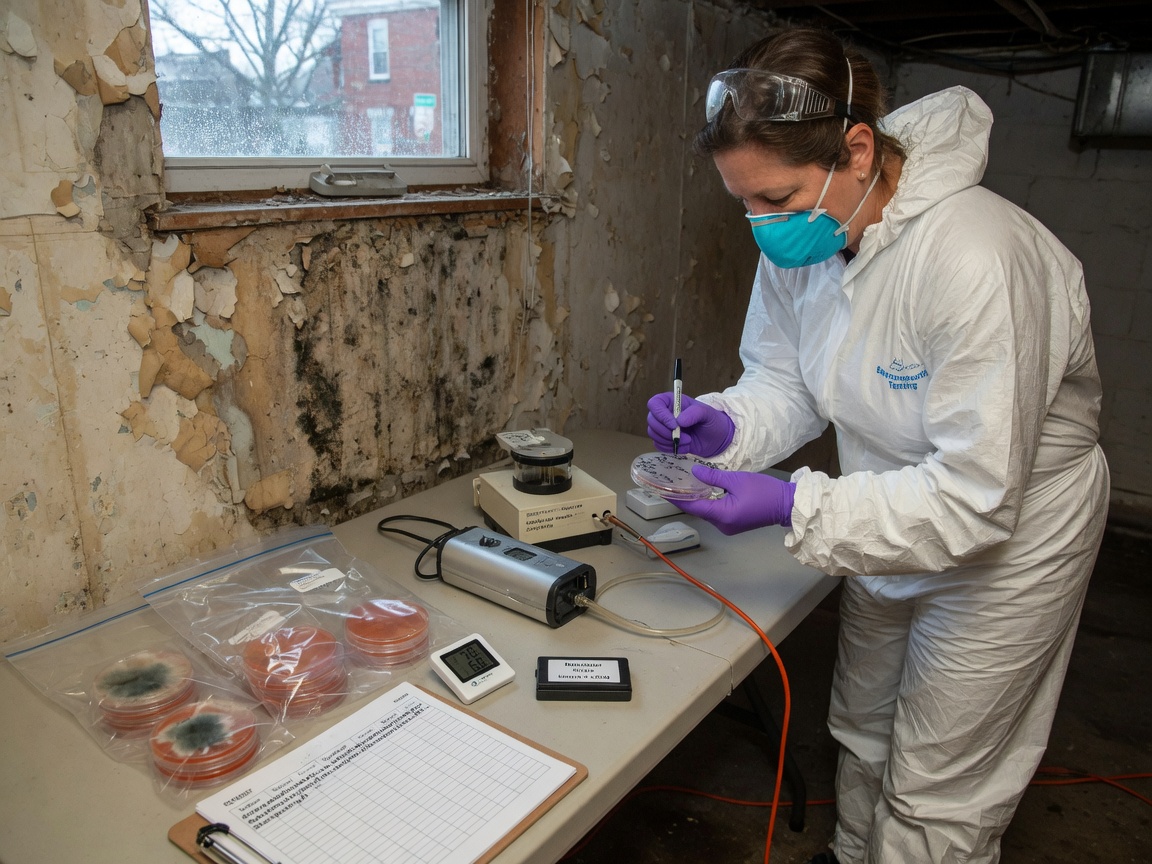
Rochester attics see repeated moisture from ice dams and meltwater once winter temperatures drop and snow accumulates on roofs. Older housing stock along Park Avenue and East Avenue often has limited ventilation and cellulose insulation that holds humidity after storms. Spore-count testing uses calibrated pumps and cassettes placed in the attic and a control living-space sample so we can compare indoor versus outdoor loads. Results tell us whether the colony is active or just dormant spores from past leaks near High Falls-area properties or Charlotte bungalows. We schedule around weekday 8am–6pm or Saturday 9am–2pm windows from our South Clinton Avenue shop so samples reach the lab same day.
Surface tape lifts and bulk insulation samples complement air counts when visual staining appears on rafters or when homeowners report musty odors after a thaw. In Monroe County the humid-continental pattern means spring melt can drive spores through soffit gaps into living space; testing before any demolition prevents unnecessary tear-out. We note construction era—many 1920s East Avenue homes still have original lath and plaster ceilings that hide condensation. Outdoor spore baselines change with Rochester Public Market pollen seasons, so we always collect a simultaneous exterior sample. Clearance testing after remediation confirms the count has dropped below typical outdoor levels rather than relying on appearance alone.
Edge cases include attics over garages in Pittsford colonials where vehicle exhaust and road salt accelerate corrosion of metal ductwork, creating extra condensation points. We avoid testing during active snowmelt if the roof is leaking, because standing water skews counts. New York State does not mandate a specific spore threshold for occupancy, so we interpret results against outdoor controls and the homeowner’s symptoms rather than a single number. If counts remain elevated after drying, we recommend targeted removal of wet insulation rather than whole-attic replacement. All sampling equipment is calibrated and chain-of-custody documented so the lab report stands up if a buyer or insurer later questions the work.
Technician insight
In Rochester the thing that catches most people out with mold spore count testing is collecting samples right after a heavy snowmelt when the attic is still dripping; the extra moisture inflates counts and makes a dry, well-ventilated space look worse than it is. I always wait until the roof is dry and the ice dams have receded, especially on the older East Avenue and Park Avenue houses with original roof decks. Outdoor baselines also jump during the pollen season around the Rochester Public Market, so we never skip the exterior control.
Charlotte bungalow after ice-dam leak
A homeowner in Charlotte noticed a musty smell after a long thaw. We found wet cellulose at the eaves and ran air cassettes plus tape lifts. Counts were elevated versus the outdoor sample but dropped after we dried the insulation and added soffit vents. Clearance testing two weeks later showed the attic back in line with typical Monroe County outdoor levels.
Mold Spore Count Testing Services We Offer
✓Attic Air Cassette Sampling
Timed pump draws through spore traps placed at ridge and eave to capture airborne counts typical of Rochester winter attics.
✓Surface Tape-Lift Testing
Adhesive lifts from rafters, sheathing, and insulation in Park Avenue and East Avenue homes to identify settled species.
✓Pre-Remediation Baseline Counts
Full indoor-outdoor comparison before any demolition so we know starting spore loads in Monroe County properties.
✓Post-Remediation Clearance Testing
Repeat sampling after drying and removal to confirm counts have returned to outdoor background levels.
✓Bulk Insulation Analysis
Lab culture of cellulose or fiberglass samples from Charlotte and Irondequoit attics where visual mold is hidden.
✓Living-Space Control Sampling
Simultaneous downstairs air samples so we can see whether attic spores are migrating into occupied rooms.
Mold Spore Count Testing Cost in Rochester, NY
| Service | Typical Range | What Affects It |
|---|---|---|
| Basic attic air + outdoor control | $250–$400 | Two cassettes, standard 24–48 hr lab |
| Air plus surface tape lifts | $350–$550 | Adds 2–4 lifts from rafters or insulation |
| Full pre- and post-remediation pair | $500–$800 | Two visits, extra samples if living space is included |
| Rush same-day lab | +$75–$150 | When a sale or occupancy deadline is tight |
Ranges are typical for Rochester, NY and confirmed with an exact written quote before any work starts.
How it works
- 1
Site Walk-Through And Sample Plan
We inspect the attic, note ice-dam stains or ventilation gaps, and decide cassette locations versus outdoor control.
- 2
Calibrated Pump Sampling
Pumps run a set volume of air through spore traps at ridge, eave, and living space while we collect surface lifts.
- 3
Chain-Of-Custody To Lab
Cassettes and lifts are sealed, labeled, and delivered same day so results reflect actual Rochester conditions.
- 4
Report Review And Next Steps
We walk through the spore counts versus outdoor baseline and recommend drying, targeted removal, or further investigation.
Pricing
Most Rochester attic spore-count packages fall in a modest range depending on number of samples and lab turnaround; we quote after seeing the attic rather than a flat fee.