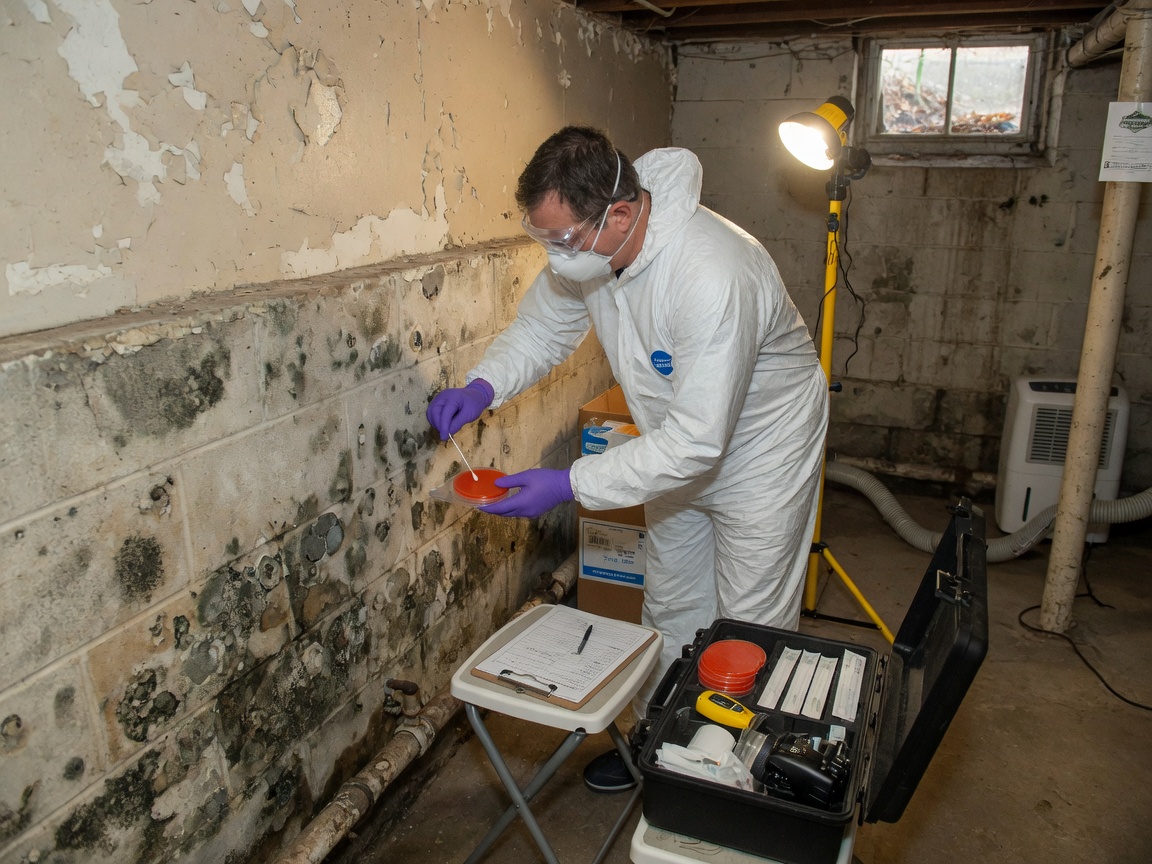
Rochester attics in older Park Avenue and East Avenue houses often hide surface mold on the underside of roof sheathing after ice-dam melt from our humid-continental winters. Snow piles on roofs around High Falls and the George Eastman Museum, then thaws into the attic when temperatures swing. We collect tape-lift and swab samples from those exact surfaces rather than guessing from air tests alone. Moisture meters confirm whether the wood is still wet enough to support growth before we send anything to the lab. That distinction matters in Monroe County because many 1920s–1940s roofs were built without today’s ventilation details.
Charlotte bungalows and Pittsford colonials share the same problem: vapor from bathrooms and kitchens rises into unconditioned attics and condenses on cold plywood. Surface testing tells us whether the discoloration is active mold or just staining from past leaks. We avoid bulk demolition until the lab results come back, which keeps the job smaller and the home livable. Samples are taken from multiple rafter bays because mold rarely stays in one spot once the snow load has sat for weeks. Results typically arrive within a few business days so you can decide on next steps without waiting through another freeze-thaw cycle.
Irondequoit ranch attics and Brighton capes often have limited headroom, so we work from the hatch or a small access panel rather than tearing out insulation first. Surface testing still reaches the critical spots—nail pops, ridge boards, and the top plates—without spreading spores through the living space. We note the exact location of each sample so the report maps directly to what you can see. If the lab finds only common outdoor molds at low levels, we can often stop at improved ventilation instead of full removal. That practical cutoff saves homeowners from unnecessary work when the winter moisture source is already gone.
Technician insight
In Rochester the thing that catches most people out with Surface Mold Testing is assuming black stains on 1920s Park Avenue rafters are automatically Stachybotrys. After a long snowy winter those marks are often just condensed moisture plus common Cladosporium; the tape lift tells us which it is before anyone starts ripping out insulation. We see the same pattern in East Avenue and Charlotte attics where ice dams sit for weeks.
Ice-dam staining in a Charlotte bungalow attic
Homeowner noticed dark streaks on the underside of the roof after a heavy February thaw. Moisture meter showed the plywood still above 20 percent in two bays. Tape lifts confirmed Cladosporium on the surface but no Stachybotrys; we recommended targeted drying and a ridge-vent upgrade rather than full removal. The attic dried out once the snow load was gone and no further growth appeared.
Surface Mold Testing Services We Offer
✓Tape Lift Sampling on Attic Sheathing
Clear adhesive lifts from stained plywood or OSB that capture spores for lab ID without damaging the wood.
✓Swab Testing of Rafters and Trusses
Sterile swabs on visible growth along framing members so we know which species are actually colonizing the lumber.
✓Bulk Sampling of Insulation or Debris
Small material samples from cellulose or fiberglass that has sat against wet sheathing after snow melt.
✓Moisture Mapping Before Sampling
Pin and pinless meter readings that show which surfaces are still wet enough to justify lab work.
✓Post-Remediation Surface Clearance
Follow-up tape lifts after cleaning to confirm the treated wood is no longer supporting active growth.
✓Multi-Bay Comparative Sampling
Paired samples from suspect and clean areas so the lab report shows whether mold is localized or widespread.
Surface Mold Testing Cost in Rochester, NY
| Service | Typical Range | What Affects It |
|---|---|---|
| Single-area tape-lift set (2–3 samples) | $180–$280 | Typical for one visible stain in a small attic hatch area |
| Multi-bay sampling (4–6 samples) | $280–$420 | Needed when staining appears in several rafter bays after heavy snow |
| Add-on bulk insulation sample | $60–$90 | Only if cellulose or fiberglass is in contact with wet wood |
| Post-cleaning clearance set | $150–$250 | Fewer samples once the source moisture has been stopped |
Ranges are typical for Rochester, NY and confirmed with an exact written quote before any work starts.
How it works
- 1
Access and Visual Survey
We enter through the existing hatch, note ice-dam staining and ventilation gaps, and mark the wettest surfaces with a moisture meter.
- 2
Targeted Sample Collection
Tape lifts and swabs are taken from the marked spots on sheathing and rafters; each is labeled with exact location.
- 3
Chain-of-Custody to Lab
Samples go to an independent lab the same day we collect them so results are not delayed by weekend weather.
- 4
Report Walk-Through
We review the species list and spore counts with you, tying each finding back to the attic conditions we saw.
Pricing
Most attic surface-testing visits in Rochester fall in a modest range driven by how many samples the lab needs rather than square footage.