
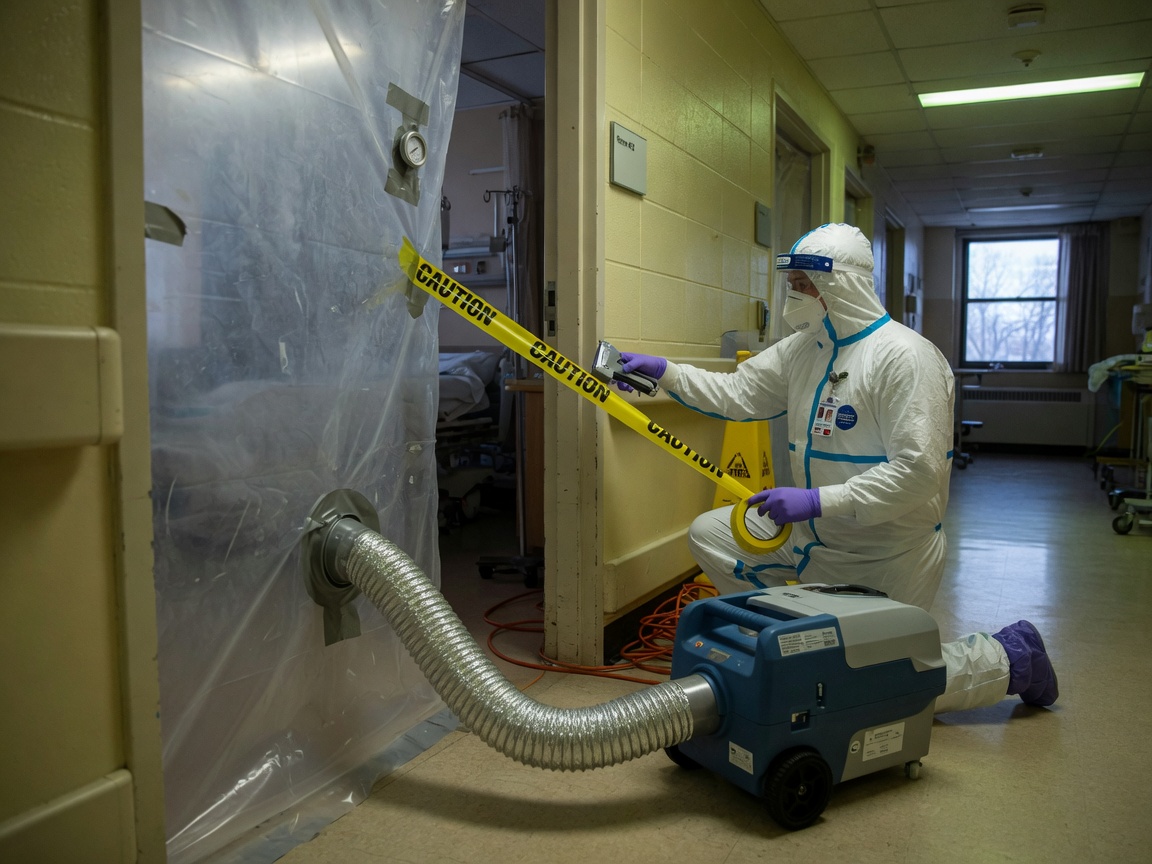
Rochester attics in Park Avenue, East Avenue, and Charlotte often sit over century-old balloon-frame or balloon-and-platform houses whose roof decks and knee walls were never designed for today’s insulation loads. Humid continental winters pile snow on those roofs; melt-freeze cycles drive ice dams that leak into the attic, feeding mold on the underside of the sheathing. Negative air containment is how we keep those spores from riding the stack effect down into living space while we open the attic. We tape 6-mil poly to rafters and collar ties, then pull air through HEPA machines so the work zone stays at a lower pressure than the rest of the house.
The machines themselves are not just box fans. We stage 500–2,000 CFM HEPA air scrubbers at the attic hatch or a gable vent, exhaust through a sealed flex duct that dumps outdoors, and watch a digital manometer so we hold at least –0.02 inches of water column. In tight Irondequoit bungalows the hatch is often the only opening; in Pittsford colonials we sometimes have to cut a temporary exhaust port through a gable. If the poly tears on a nail or the manometer drops, we stop work until the envelope is re-sealed. That is the difference between containing the job and contaminating the bedrooms below.
Monroe County does not require a special permit for residential mold containment, but we still treat the attic as a regulated work zone: no walking through living space in dirty PPE, no unfiltered exhaust into the yard near a neighbor’s window. After the mold is bagged we run the scrubbers an extra cycle, then fold the poly inward so nothing falls into the house. Homes near High Falls or the Public Market often have mixed HVAC that can pull attic air if we do not isolate returns; we tape those off first. The goal is simple: when we leave, the only thing that moved is the mold we meant to remove.
Technician insight
In Rochester the thing that catches most people out with negative air containment is how leaky those 1920s Park Avenue attics really are. Ice-dam water has already opened gaps at the eaves, so if you just throw a fan in the hatch you pressurize the living space instead of containing it. We spend more time taping rafters and checking the manometer than we do running the machines, because a 0.01 drop in pressure here means spores are already in the bedrooms.
East Avenue Cape with ice-dam mold
Homeowner noticed a musty smell after a heavy snow melt. We found black staining on the roof deck above the knee walls and a leaky hatch that would have dumped spores downstairs. We poly’d the eaves, set a gable exhaust, and held negative pressure while we scraped and bagged the growth. The house stayed clean; the attic dried without spreading the problem.
Negative Air Containment Services We Offer
✓Attic Hatch Negative Pressure Setup
Seal the hatch, install a zipper door, and pull HEPA exhaust so spores stay in the attic instead of dropping into the hallway.
✓Gable-Vent Exhaust Containment
Route filtered air out a gable or soffit so we do not pressurize the rest of a Park Avenue or East Avenue house.
✓Poly Isolation Barriers for Knee Walls
Tape 6-mil sheeting to rafters and knee-wall framing so mold work in the eaves does not migrate into finished rooms.
✓Manometer Pressure Monitoring
Continuous digital readout of negative pressure; we stop if the reading falls so containment never becomes guesswork.
✓HEPA Air Scrubber Staging
Place and duct 500–2,000 CFM machines sized to the attic volume so air changes stay high without collapsing the poly.
✓Ice-Dam Moisture Zone Isolation
Contain the wet roof-deck areas common after Rochester winters so we can dry and treat without spreading spores.
✓HVAC Return Isolation During Containment
Tape and bag returns that could pull attic air into living space in mixed-system Monroe County homes.
Negative Air Containment Cost in Rochester, NY
| Service | Typical Range | What Affects It |
|---|---|---|
| Small bungalow attic containment | $450–$850 | Single hatch, one machine, Charlotte or Brighton one-story homes |
| Two-story colonial or Cape containment | $700–$1,400 | Knee walls, extra poly, possible gable exhaust in Pittsford or East Avenue |
| Ice-dam wet-zone isolation add-on | $200–$450 | Extra sheeting and drying time after winter leaks |
| Extra HEPA machine day | $150–$250 | Larger attics or when we need to hold pressure longer |
Ranges are typical for Rochester, NY and confirmed with an exact written quote before any work starts.
How it works
- 1
Walk The Attic And Map Air Paths
We look at hatch location, gable vents, and any returns that could short-circuit containment, then decide where poly and machines go.
- 2
Build The Envelope
Poly is taped to clean wood, zipper doors installed, and HVAC returns bagged so the only opening is the planned exhaust.
- 3
Start Negative Air And Verify
HEPA machines come on, manometer is set, and we confirm –0.02 in. w.c. before any demolition starts.
- 4
Work Under Containment
Mold is removed and bagged while pressure is watched; any tear or drop in reading stops the job until it is fixed.
- 5
Breakdown And Final Scrub
Poly is folded inward, machines run a last cycle, and we leave the attic under slight negative until the homeowner is ready to close it up.
Pricing
Cost tracks attic size, access, and how many machines we need to hold pressure in older Monroe County houses; we quote after we see the space, not from a phone estimate.