
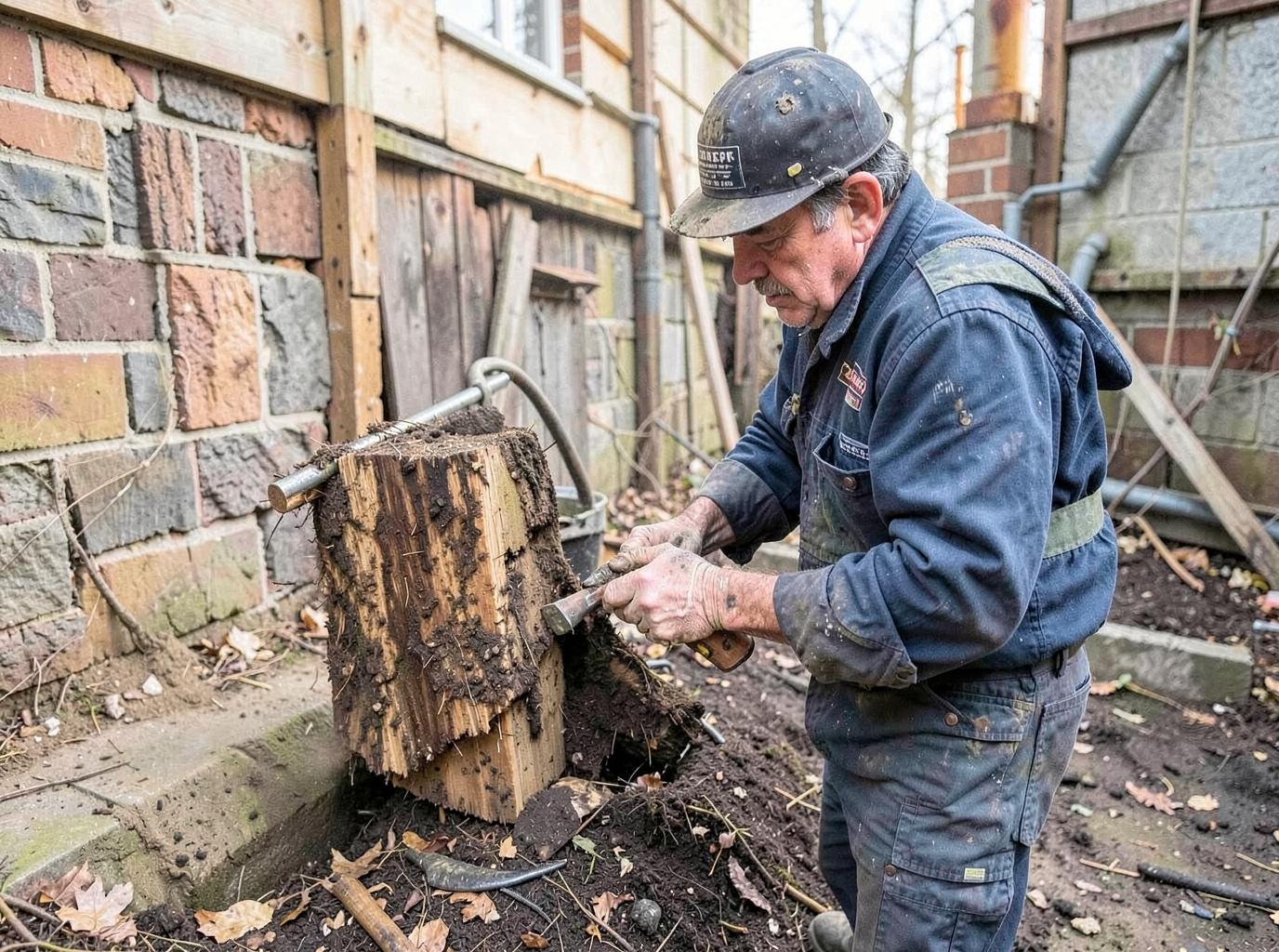
Wood rot in Rochester attics rarely starts as a standalone problem. In Park Avenue and East Avenue houses, century-old rafters and sheathing sit above plaster ceilings that were never designed for modern insulation. Once winter temperatures drop and snow piles on the roof, ice dams form along the eaves; meltwater backs up under shingles and soaks the decking. That moisture, combined with humid-continental swings, feeds brown-rot fungi that soften the wood from the inside out. We open the affected bays, probe with an awl, and map how far the decay has traveled along the grain before any treatment begins.
Treatment is not a coat of paint. After the source of water is stopped—often a blocked soffit vent or a failed ice-and-water shield—we remove unsound wood, treat remaining members with a borate solution that stays in the fibers, and sister or replace only what has lost structural section. In Charlotte bungalows near the lake the same pattern shows up after lake-effect snow, while Brighton and Pittsford colonials more often hide rot at the valley rafters. Monroe County inspectors look for remaining sound wood and proper ventilation, not a pretty surface. We leave the work open for that inspection so you can see exactly what was done.
Edge cases matter. If the rot has reached the top plates or the ceiling joists that also carry the second-floor loads, we stop and talk through shoring before cutting. Frozen attics in January make borate application slower because the wood must be above freezing for the chemical to penetrate; we schedule those jobs for milder stretches or use heated enclosures. Never assume the mold you see on the insulation is the whole story—the real damage is usually two feet farther along the rafter than the stain. We photograph every bay so you have a record of what was treated versus what was replaced.
Technician insight
In Rochester the thing that catches most people out with wood rot treatment is assuming the brown stain on the insulation is the edge of the problem. On Park Avenue and East Avenue houses the grain of old-growth rafters carries moisture two or three feet past the visible mark, especially after a winter of ice dams. If you only treat what you can see from the hatch you leave a pocket that will bloom again once the next lake-effect snow hits.
East Avenue ice-dam rafters
Homeowner noticed a soft spot in the ceiling after a heavy snow week. We found decayed sheathing and two rafters softened well past the stain line from repeated ice-dam leaks. Unsound wood came out, remaining members received borate, and sisters were added without opening the rooms below. The bay stayed dry through the next thaw.
Wood Rot Treatment Services We Offer
✓Rafter and Sheathing Rot Repair
Remove decayed decking and rafters, treat remaining wood with borate, and sister or replace members so the roof plane stays true in older Rochester attics.
✓Ice Dam Leak Wood Restoration
Address the softened wood left after meltwater backs under shingles on Park Avenue and East Avenue roofs once snowy winters end.
✓Attic Valley and Hip Rafter Treatment
Target hidden rot at valley intersections common in Brighton and Pittsford colonials where water concentrates.
✓Soffit and Fascia Rot Repair
Replace or treat the eave members that ice dams soak first, restoring ventilation paths that keep Monroe County attics dry.
✓Borate Wood Preservative Application
Apply penetrating borate to remaining sound wood so residual moisture from condensation or past leaks cannot restart decay.
✓Sistering and Structural Reinforcement
Add new lumber alongside weakened rafters or joists when full replacement would disturb finished ceilings below.
Wood Rot Treatment Cost in Rochester, NY
| Service | Typical Range | What Affects It |
|---|---|---|
| Single-bay rafter treatment and sistering | $400–$900 | Access, remaining sound wood, and whether ceiling finish is disturbed |
| Sheathing replacement per square | $250–$550 | Ice-dam staining vs. through-rot, matching thickness |
| Soffit and fascia rot repair (typical run) | $350–$800 | Length of eave and whether vents must be rebuilt |
| Borate treatment only (sound wood) | $150–$350 | Square footage and whether wood is frozen or dry enough to accept chemical |
Ranges are typical for Rochester, NY and confirmed with an exact written quote before any work starts.
How it works
- 1
Moisture Source Stopped
We confirm ice dams, roof leaks, or blocked vents are fixed so treatment is not wasted on wood that will get wet again.
- 2
Decay Mapped And Unsound Wood Removed
Awl probing and moisture readings show how far the rot has traveled; only unsound material is cut out.
- 3
Borate Treatment And Drying
Remaining members are treated and allowed to drop below the moisture threshold before new lumber goes in.
- 4
Sistering Or Replacement And Ventilation Check
New wood is installed, soffits reopened, and the bay left visible for your inspection.
Pricing
Cost follows how many bays are involved and whether rafters can be sistered or must be replaced; we quote after we see the wood, not from a photo.