
2026-09-03 ·
Clearing Mold From Attic Storage Areas in Rochester
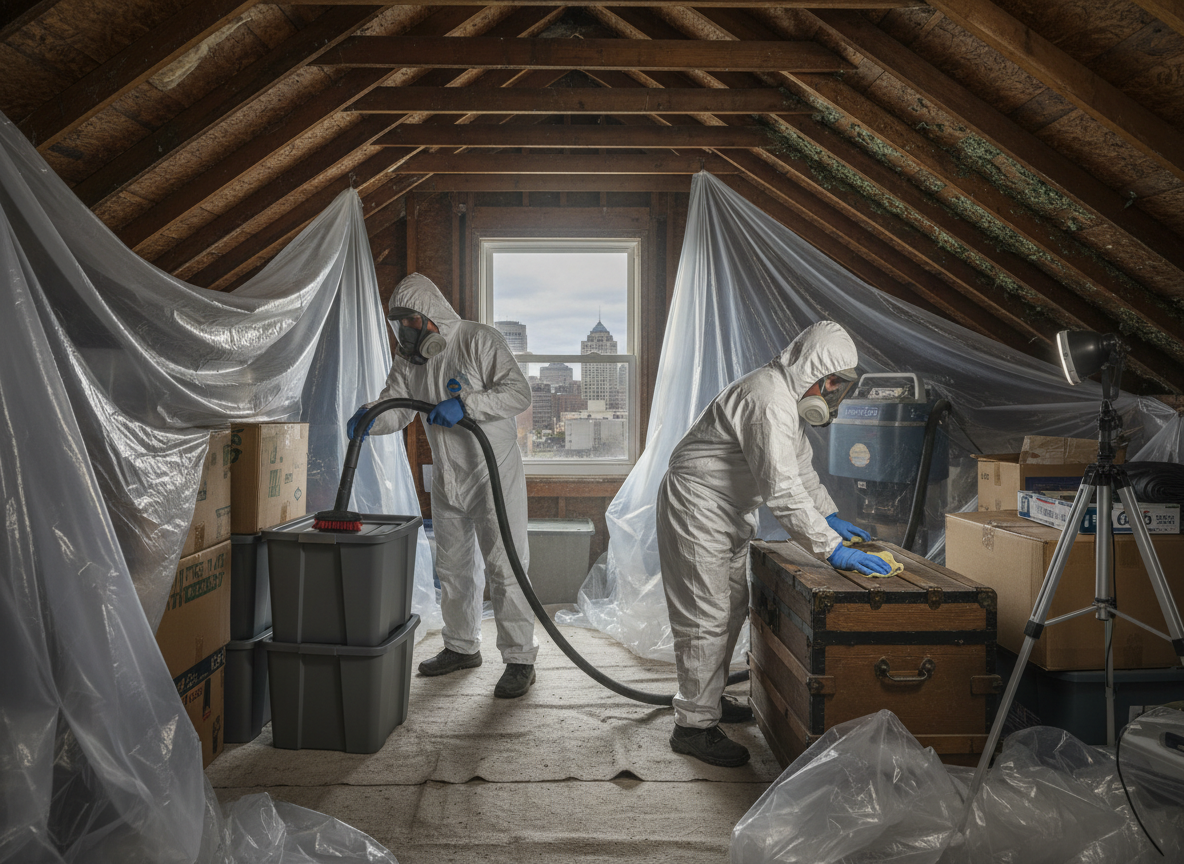
Clearing mold from attic storage areas in Rochester typically means isolating and bagging porous belongings, HEPA-vacuuming remaining surfaces, treating wood framing, and replacing wet insulation so stored items no longer sit in a humid pocket. In Monroe County’s humid continental climate, cold snowy winters drive ice dams and slow roof leaks that soak cardboard, holiday decorations, and clothing piled near the eaves in Park Avenue, East Avenue, and Charlotte houses. Once winter temperatures drop, those packed attics often stay damp long enough for growth on the underside of boxes and along rafters. Homes near High Falls, the Rochester Public Market, and the George Eastman Museum share similar older roof lines and limited soffit airflow that make storage zones the first place mold shows up.
Why Packed Attics in Monroe County Grow Mold Fast
Older housing stock along East Avenue and in Charlotte often has shallow attics, original cellulose or fiberglass, and few ridge vents. When snow piles on the roof and interior heat leaks upward, ice dams form and meltwater runs under shingles onto stored boxes. Cardboard wicks that moisture, then holds it against the decking. Brighton, Irondequoit, and Pittsford houses see the same pattern after lake-effect events. Relative humidity above 60% for more than a few days is enough for colonies on the bottom of plastic totes that look dry on top. A thorough attic mold inspection maps which piles sit over wet insulation versus which simply need airing. Terrain near the Genesee gorge and older gutters that clog with leaves add extra water load each spring. Owners who leave Christmas decorations in the same corner year after year create a repeating moisture trap that ventilation alone cannot fix.
How to Isolate and Remove Contaminated Storage
Work from the hatch outward so spores do not drop into living space. Wear an N95, cover the opening with plastic, and bag every porous item—paper, fabric, untreated wood—that shows staining or a musty smell. Non-porous plastic bins can be wiped with detergent and moved downstairs. Discard soaked insulation that has been compressed under boxes; it will not dry in place. HEPA vacuuming of remaining joists and the underside of the roof deck follows bagging. For growth on rafters, wood framing treatment and targeted insulation mold treatment keep the structure from re-seeding new storage. In Park Avenue walk-ups the hatch is often small, so materials come out in 30-gallon contractor bags rather than bulk. Never shake boxes in the attic; that aerosolizes spores into the rest of the house. After removal, run a dehumidifier at the hatch for 48 hours if outdoor air is still humid.
Moisture Sources That Keep Storage Zones Wet
Ice dams, missing vapor barriers, and bathroom fans that dump into the attic rather than outdoors are the usual culprits in Rochester. A moisture source identification visit finds whether the leak is at a chimney, a skylight, or simply condensation on the cold roof deck. Homes in Irondequoit and Pittsford with finished second floors often have bath exhaust that never reached the exterior, so steam rises into the storage area all winter. Gutter overflow at the eaves soaks the first 3–4 feet of insulation where people typically stack holiday bins. Once the source is fixed, attic ventilation improvement and a vapor barrier keep new boxes dry. Spring snow melt along East Avenue streets can also back up into soffits if downspouts are buried. Addressing the water first prevents the same mold from returning the next January. Fall checks described in fall maintenance to stop attic mold in Rochester catch these issues before storage goes back up.
After Cleanup: Restoring a Usable Storage Space
Once surfaces are dry and treated, replace insulation to the depth the roof assembly can handle without blocking vents. Keep new storage at least 6 inches off the decking and away from the eaves so air can move. Plastic totes with lids beat cardboard in this climate. A small attic fan or additional soffit screening helps in Brighton and Charlotte houses that stay closed all winter. Schedule work during business hours Monday–Friday 8am–6pm or Saturday 9am–2pm from the shop at 1925 S Clinton Ave so containment can be set before the first bag comes down. Post-work air sampling is useful if anyone in the house is sensitive. The goal is a dry, inspectable attic where holiday decorations can sit without becoming a moisture sponge every snow season. Neighbors near the Rochester Public Market who follow the same sequence rarely see the same colonies return the following year.