
2026-09-03 ·
How Ice Dams Form Attic Mold in Rochester Winters
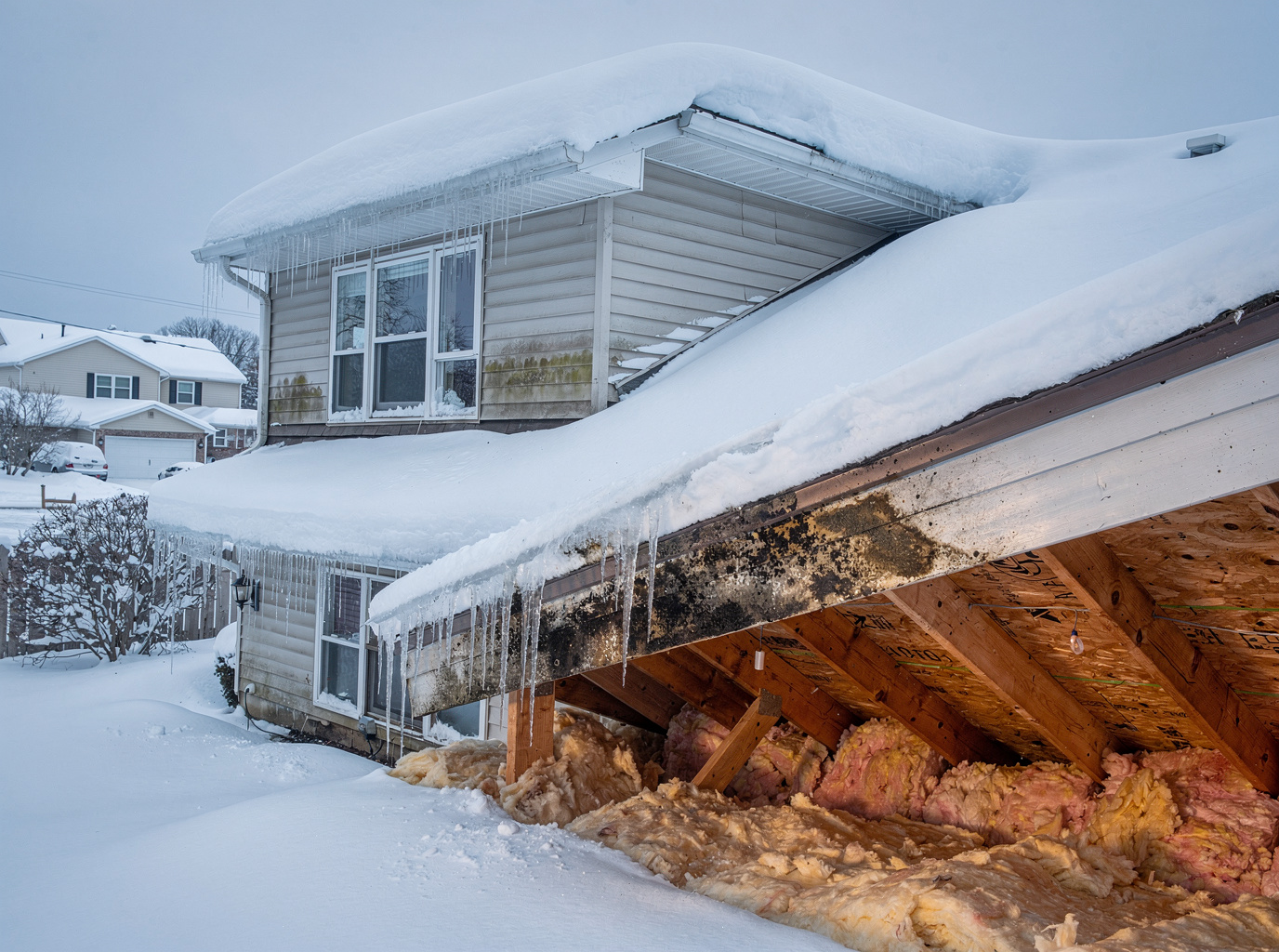
Ice dams form attic mold in Rochester winters when warm air leaking into the attic melts snow on the roof, water runs to the cold eaves, freezes into a ridge, and later meltwater is forced under shingles onto sheathing and insulation. In Monroe County’s humid continental climate with cold snowy winters, that sequence often starts after the first 8–12 inch storm and can soak wood for days before anyone sees a stain. Homes along Park Avenue, East Avenue, and Charlotte, plus nearby Brighton, Irondequoit, and Pittsford, share older roof pitches and limited ventilation that make the dam last longer and the wetting more thorough. Once cellulose or fiberglass stays above 60% moisture, mold can colonize in 24–48 hours of attic temperatures that still hover near freezing at night.
Why Rochester Winters Create Perfect Ice Dam Conditions
Snow piles on roofs from High Falls to the George Eastman Museum because lake-effect bands stall over Monroe County and dump wet, heavy snow that sticks. Daytime sun or indoor heat then melts a thin layer at the roof deck while the overhang stays well below 32 degrees. Water trickles to the gutter line, freezes, and builds a dam that can be 4–8 inches high after two or three freeze-thaw cycles. Attics in brick and wood-frame houses near Rochester Public Market often lack continuous soffit-to-ridge airflow, so heat from bathrooms and kitchens rises through unsealed hatches and recessed lights. That extra 8–15 degrees at the peak is enough to keep melting going even when outdoor air is 15–20 degrees. Gutters clogged with late-fall leaves from East Avenue maples hold the first ice in place, so the dam forms faster than on a clean eave. The same pattern repeats in Irondequoit and Pittsford whenever a January thaw is followed by another arctic blast.
How Meltwater Reaches Attic Wood and Insulation
Once the dam is in place, subsequent melt has nowhere to go except backward under the shingles. On typical 4/12 to 6/12 roofs common in Charlotte and Park Avenue, water travels 2–6 feet upslope before it finds a nail hole or lifted tab. It then soaks the roof deck, drips onto the top of the insulation, and wicks along rafters. Cellulose packed against the eaves stays wet longest because it holds 2–3 times its weight in water. Fiberglass batts sag and create cold spots that keep the cycle going. Ice dams also force water around chimney flashings and skylights, sending streams down the interior face of the sheathing. That is why an attic mold inspection after a heavy snow week often finds dark staining exactly where the dam sat, not at a random leak. Homes in Brighton near 1925 S Clinton Ave see the same path because many still have original 1920s–1950s roof framing with little or no ice-and-water shield at the eaves.
From Wet Sheathing to Visible Mold Colonies
Wet wood and insulation do not stay sterile. In an unheated Rochester attic, relative humidity can sit at 70–90% for weeks after the snow melts because cold air cannot dry the mass. Cladosporium and Penicillium appear first as gray or green dust on the underside of the plywood; Aspergillus follows on the paper facing of the insulation. Growth is fastest where the wood stays above 20% moisture content, which is common along the north slope that never sees winter sun. By the time a homeowner notices a musty smell at the hatch, colonies may already cover 20–40 square feet of rafters. That is the point where attic mold remediation becomes necessary rather than simple drying. Older chimneys in the same houses can add a second moisture source; see attic mold and chimney leaks in Rochester's older chimneys for how those two problems overlap. The combination of ice-dam wetting plus residual chimney moisture is why some attics in East Avenue row houses need both framing treatment and insulation replacement in the same visit.
What Homeowners in Park Avenue and Nearby Towns Can Watch For
Look for icicles longer than 12 inches hanging from the eaves after a thaw, ridges of ice along the gutter, and water stains on the ceiling just inside the exterior wall. In Charlotte bungalows those stains often show first in the upstairs bedroom closest to the street. A damp, earthy odor at the attic hatch after a 40-degree day is another early sign. Check the insulation for dark clumps or a compressed, matted look near the soffits. Homes in Irondequoit and Pittsford with cathedral ceilings may hide the same wetting behind drywall, so a thermal camera during hidden mold detection can catch it before it blooms. If you see any of these after a January storm, do not wait for spring; the next freeze will lock the moisture in place. Our shop at 1925 S Clinton Ave is open Mon–Fri 8am–6pm and Sat 9am–2pm for questions about what you are seeing. For a broader look at what older stock costs to clean, read cost of attic mold removal in Rochester NY older homes.
Stopping the Cycle Before Spring Thaw
The only lasting fix is to keep the roof deck cold and the eaves clear. That means sealing every penetration, adding continuous intake at the soffits, and installing a ridge vent so heat does not pool at the peak. Ice dam prevention work in Monroe County also includes heat cables only as a last resort on problem valleys, never as a substitute for air sealing. Once the attic is dry, replacing soaked cellulose with new fiberglass or treating remaining wood stops the mold from returning when the next 10-inch storm arrives. Brighton and Park Avenue houses that complete this sequence before March usually stay clean through the following winter. The goal is simple: no meltwater under the shingles, no wet insulation, no colonies on the rafters. That is how ice dams stop forming attic mold in Rochester winters.