
2026-09-03 ·
Spring Thaw and Attic Mold in Monroe County
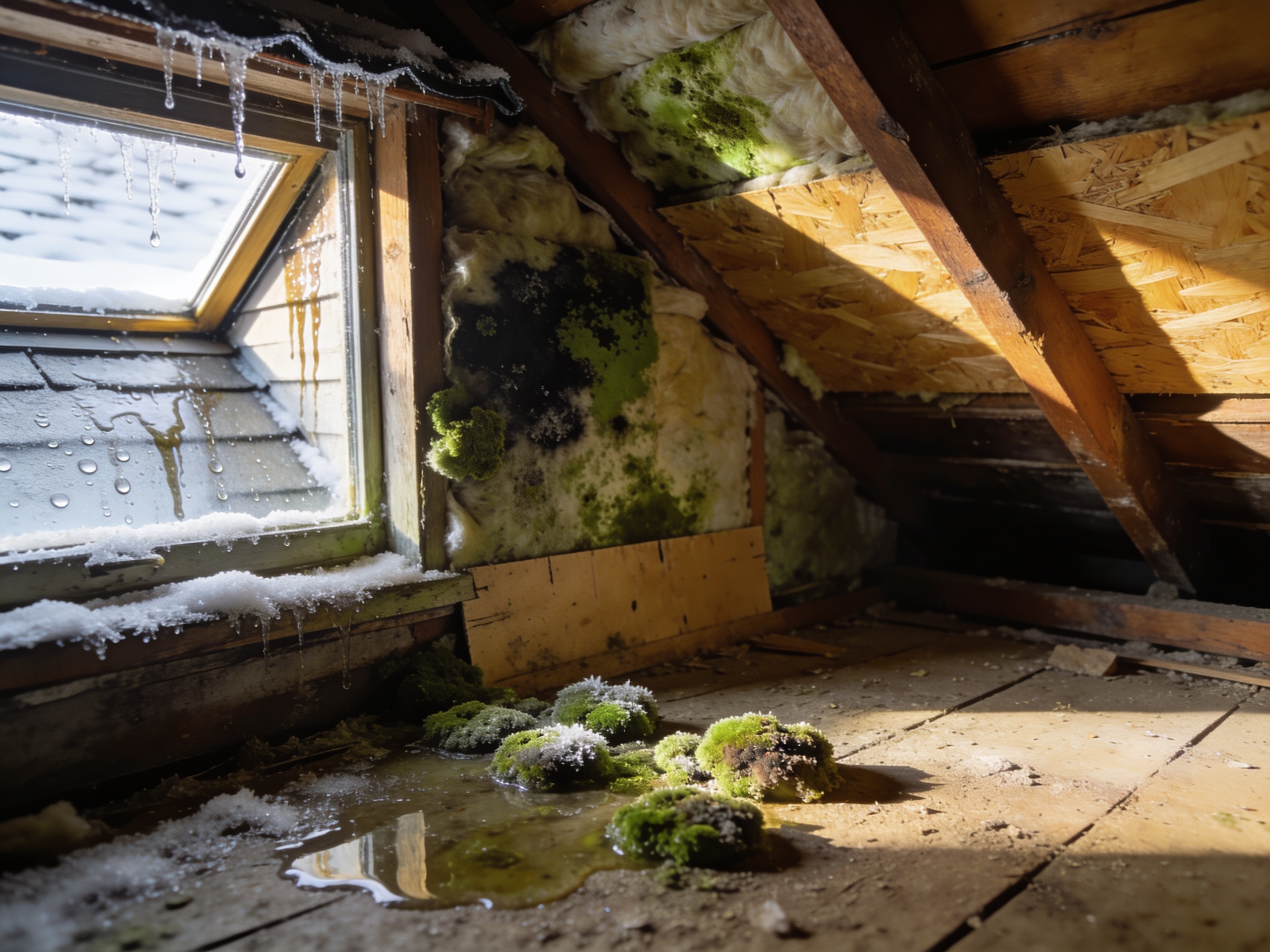
Spring thaw in Monroe County typically uncovers attic mold that formed under ice dams and trapped moisture during the long, snowy winter, especially in older roofs across Park Avenue, East Avenue, and Charlotte. Melting snow and ice send water under shingles and into poorly ventilated attics once daytime temperatures rise above freezing; that water soaks cellulose or fiberglass, darkens rafters, and lets colonies spread on the underside of the deck. Homes in Brighton, Irondequoit, and Pittsford show the same pattern because much of the housing stock dates to the same era of limited soffit and ridge venting. The first weeks after a heavy snowpack melts are when stains, musty odor, and compressed insulation become obvious—not because mold suddenly appeared, but because the thaw finally lets you see the damage winter hid.
Why Cold Snowy Winters Prime Attics for Spring Growth
Monroe County sits in a humid continental climate where lake-effect snow piles on roofs for months and freeze-thaw cycles repeat along the Genesee. Ice dams form when heat escaping through the attic melts snow at the peak; water runs to the cold eaves, refreezes, and backs up under the shingles. Older two-story houses near the George Eastman Museum and along East Avenue often have little or no insulation at the eaves and blocked soffits, so the cycle is worse. By March the dam finally lets go, and that stored water saturates the roof deck and the top of the insulation. Once indoor humidity from showers and cooking also rises in spring, relative humidity in a closed attic can stay high enough for mold on wood and paper-faced products. Terrain does not help: many lots in Charlotte and Irondequoit sit on clay that keeps basement and crawl-space moisture high, so the whole house stack pushes more vapor upward. The result is not a mystery—it is the predictable combination of snow load, heat loss, and 80- to 100-year-old framing that was never designed for today’s indoor moisture loads.
Ice Dams, Roof Leaks, and Neighborhood Housing Stock
Park Avenue and East Avenue blocks are packed with brick and frame houses whose attics were built before continuous ridge vents were common. When an ice dam fails during thaw, water often follows the same path year after year: along the fascia, through a failed flashing at a chimney, or down a valley that never got extra underlayment. Charlotte’s cottages closer to the lake take even heavier snow and wind-driven rain, so sheathing can stay wet for days after the surface snow is gone. In Brighton and Pittsford you see more 1950s ranches with shallow attics; a single leak can wet a large percentage of the insulation because there is nowhere for air to move. We routinely find the same sequence: compressed, stained batts, black spotting on the north-side rafters, and a musty smell that shows up only after the heat is turned down in spring. Checking the roof from the street after a thaw is not enough; you need to look at the underside of the deck and the top of the insulation. A targeted attic mold inspection after the snow is gone tells you whether the growth is surface-only or has reached the framing. Homes near High Falls and the Rochester Public Market often share the same tight lots and shared walls, so one leaking valley can affect two attics.
What to Look For and What to Do Next
After thaw, look for wavy or darkened insulation, rusty nails on the underside of the roof, and any drip marks on the ceiling below. Musty odor that was not there in January is a reliable clue that moisture finally reached organic material. Do not wait for visible black patches; Cladosporium and Penicillium can be active on damp wood long before they look dramatic. The practical sequence is: confirm the moisture source (often an ice-dam leak or blocked vent), dry the structure, then decide whether insulation must come out. Moisture source identification comes before any cleaning so you do not treat the symptom twice. If the insulation is soaked or matted, replacement after removal is usually required; our related notes on replacing insulation after attic mold removal walk through that decision. For Brighton-area houses the same steps apply—see our notes for Brighton, NY. We work Monday–Friday 8am–6pm and Saturday 9am–2pm from 1925 S Clinton Ave, Rochester, NY 14618, so spring appointments can be scheduled once the roof is safely accessible. Prevention for the next winter starts with ice dam prevention and better airflow, not just a one-time cleanup. Document stains and take photos before any work;