
2026-09-03 ·
Fixing Attic Mold in Split-Level Homes Common in Rochester Suburbs
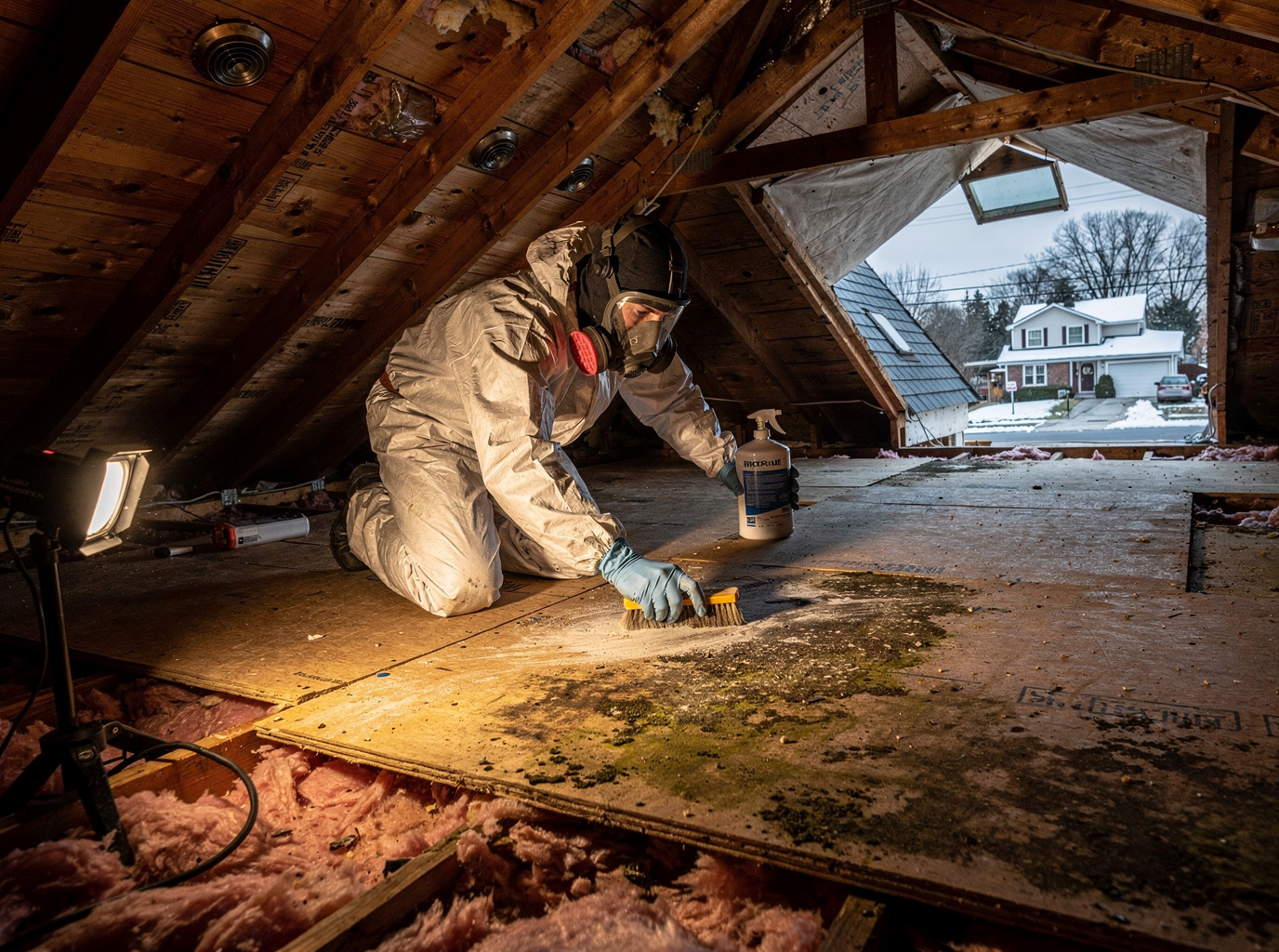
Split-level homes common in Brighton, Irondequoit, and Pittsford typically need 1–3 days of contained attic work once mold is confirmed, because the short, stepped roof planes trap humid indoor air against cold sheathing through Monroe County’s snowy winters. Fixing it means tracing the moisture path, removing wet insulation, treating framing, and restoring airflow—not covering stains. Owner-operated work from 1925 S Clinton Ave runs Mon–Fri 8am–6pm and Sat 9am–2pm with quotes you can inspect before anything is opened.
Why Rochester Split-Levels Grow Attic Mold
Ranch-over-garage and tri-level plans from the 1950s–1970s fill Brighton, Irondequoit, Pittsford, and pockets near Park Avenue and East Avenue. The upper roof is a shallow rectangle; the lower wing sits a half-story down. Warm bathroom and kitchen air rises into the high attic, then hits sheathing that sits near outdoor temperature once winter sets in. With a humid continental climate and long cold stretches, that sheathing often stays below the dew point for weeks. Ice dams along the short eaves add meltwater at the fascia. Charlotte bungalows near the lake see the same stack effect, but suburban split-levels add more interior volume feeding one small vented cavity. Original kraft-faced batts, blocked soffits, and a single gable vent were never sized for today’s tighter windows.
How Winter Moisture Reaches the Sheathing
Lake-effect snow loads the low roof; melt then refreeze at the eaves because heat leaks at the split. Condensation forms on the underside of the deck, then drips into cellulose or fiberglass. Bath fans that dump into the attic instead of through the roof are common on these plans. A leak at a step-flashing or chimney on the mid-level wall can wet only one bay while the rest looks dry from the hatch. Homes near High Falls or the Rochester Public Market sit on older city lots; suburban split-levels in Brighton sit on clay that holds surface water against foundations, raising indoor humidity that then rides the stack. George Eastman Museum–era masonry nearby is a reminder that Rochester housing is mixed-age; the split-level stock is simply the one with the most awkward attic geometry. After heavy snow, checking attic ventilation is the first honest check.
What a Real Fix Looks Like on These Roofs
Work starts with containment at the pull-down stairs so spores do not drop into living space. Attic mold remediation then maps wet insulation, removes it in bags, and HEPA-vacuums joists. Wood that stayed damp gets a targeted treatment; rotten 2x4s at the eaves are sistered, not painted. Soffits get opened so intake air can actually reach the ridge. If the roof deck is stained but sound, it stays; if ice dams have cupped plywood, that bay is replaced. Bathroom exhaust is rerouted outdoors. A small attic on a Pittsford split might be 400–700 square feet of floor; the high side is still tight for ducting and lights. Hours on site stay in that 1–3 day window when access is decent and the leak is not still active. Upfront quotes list containment, disposal, and new insulation as separate lines so you can walk the job.
After the Crew Leaves
New fiberglass or blown fill should meet current depth without burying the soffit channel. A ridge vent or additional gable screening only helps if intake is open. Attic ventilation improvement is the piece that keeps Monroe County winters from repeating the same dew-point problem. Watch the first thaw: if you see ice at the lower eaves again, the heat leak at the split still needs air sealing. Seasonal humidity in the living space should stay in a range you can measure with a cheap hygrometer, not a guess. If odors return after a warm spell, the source was missed—usually a fan dump or a flashing step, not “the insulation.” Post-work, you should be able to look at clean wood and even fill from the hatch without a flashlight hunt for leftover staining.