
2026-09-03 ·
Preventing Attic Condensation in Rochester's Humid Summers
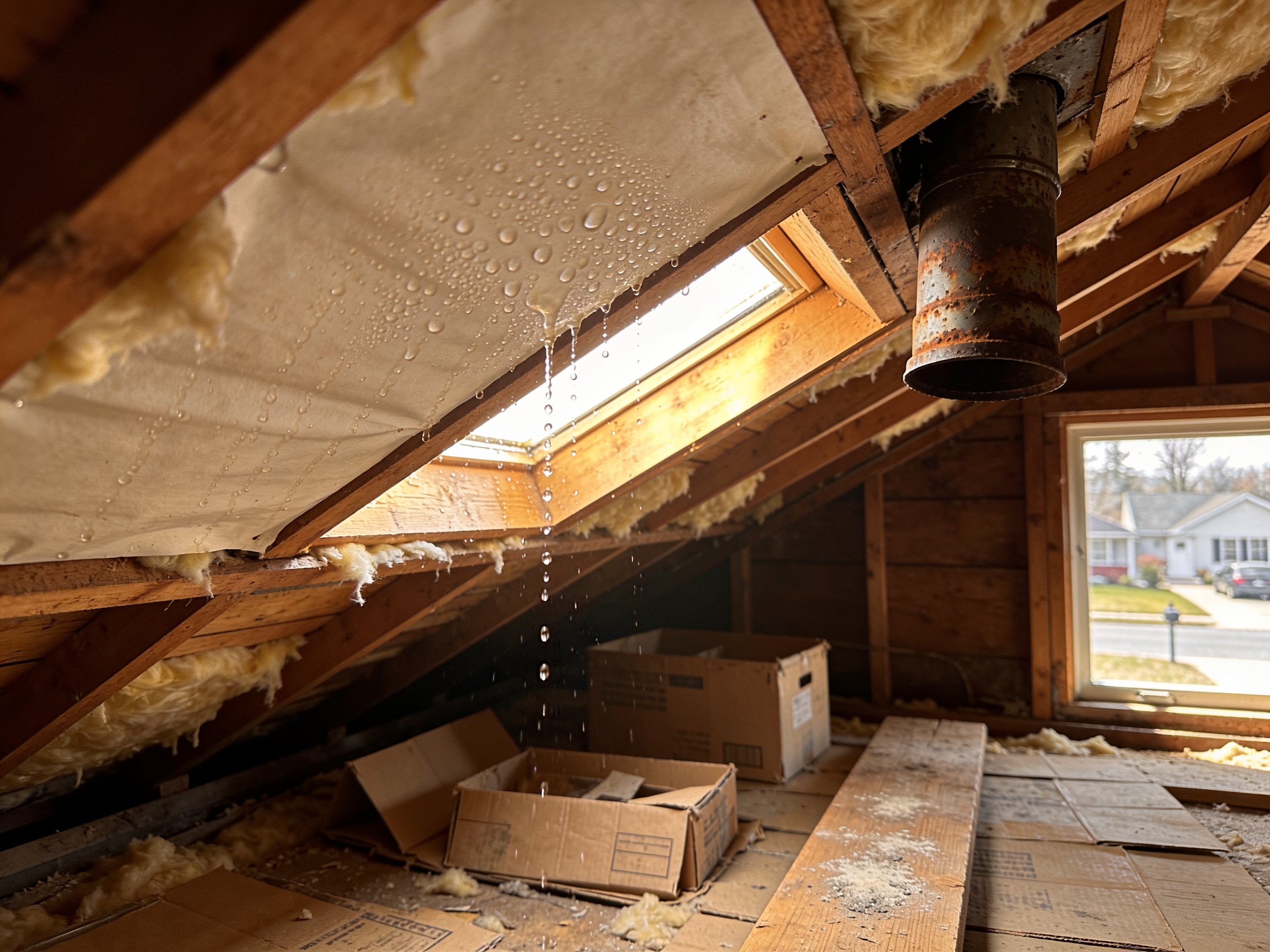
Keep attic relative humidity under 60% and roof sheathing warmer than the dew point by air-sealing the ceiling plane, balancing soffit and ridge airflow, and holding living-space RH near 45–55%. In Monroe County’s humid continental summers, warm lake-effect air meets cooler roof decks after thunderstorms, so unsealed hatches, bath fans, and thin cellulose let vapor condense overnight on OSB in Park Avenue colonials, East Avenue Tudors, and Charlotte bungalows.
Why Rochester Attics Sweat in Summer
Afternoon humidity often sits in the 70–90% range after rain near High Falls and the Rochester Public Market, then nights cool the roof. Older stock in Irondequoit, Brighton, and Pittsford still has knob-and-tube gaps, unbaffled soffits, and bath fans that dump steam into the attic instead of outdoors. That stack effect pulls moist air up past the George Eastman Museum neighborhood’s steep roofs. Once winter’s snow load is gone, summer is when you actually see beads on the underside of the deck. A 1/4-inch gap around a pull-down stair can move more vapor than a whole ridge vent on a still night. Soil around the Genesee stays damp, so basements add more moisture that eventually rides up. Watch for dark staining on the north slope first; that is where condensation starts before mold follows.
Air Sealing and Vapor Control
Stop the leak before you add vents. Foam the hatch, weatherstrip the attic access, and cap every can light and plumbing chase. In 1920s Park Avenue homes the plaster lath is full of holes; canned foam and gaskets matter more than extra insulation. A continuous vapor barrier installation on the warm side of the ceiling plane keeps indoor air from reaching cold sheathing. Do not put poly on the cold side of fiberglass—that traps moisture. After sealing, how to air seal an attic in Rochester before winter still applies in July because the same leaks drive summer condensation. Recessed lights and whole-house fans are the usual culprits we see from 1925 S Clinton Ave jobs. Spend $200–$800 on sealing before you spend on new insulation; otherwise you just bury the problem.
Ventilation That Actually Works Here
Net free area should be about 1:150 of attic floor, split evenly between low soffits and a continuous ridge. Many Brighton and Pittsford roofs have painted-over soffit screens or ridge vents blocked by insulation. Add baffles so cellulose cannot choke the intake. Powered attic fans often pull conditioned air through leaks and make condensation worse on still, humid nights. Passive attic ventilation improvement is the reliable fix. Gable vents fight ridge vents and short-circuit flow. After a lake-effect downpour, walk the attic at dusk; if the deck feels clammy, intake is starved. Keep gutters clear so ice-dam leftover water does not re-wet eaves in June.
Humidity Habits That Cut Condensation
Run bath fans 20 minutes after showers and confirm they terminate outdoors, not into the soffit—see mold in attics with bathroom exhaust fans vented wrong. Keep indoor RH 45–55% with the AC or a whole-house dehumidifier; 60% upstairs is already too high for a 70°F roof deck at night. Dryers must vent outside. In Charlotte cottages near the lake, close the attic hatch firmly and skip storing wet camping gear up there. A $15 hygrometer in the attic tells you more than guesswork. We are open Mon–Fri 8am–6pm and Sat 9am–2pm if you want a walkthrough from the Clinton Ave shop. Small habits beat a $3,000 remediation later.