
2026-09-03 ·
Why Attic Mold Returns in Some Rochester Homes
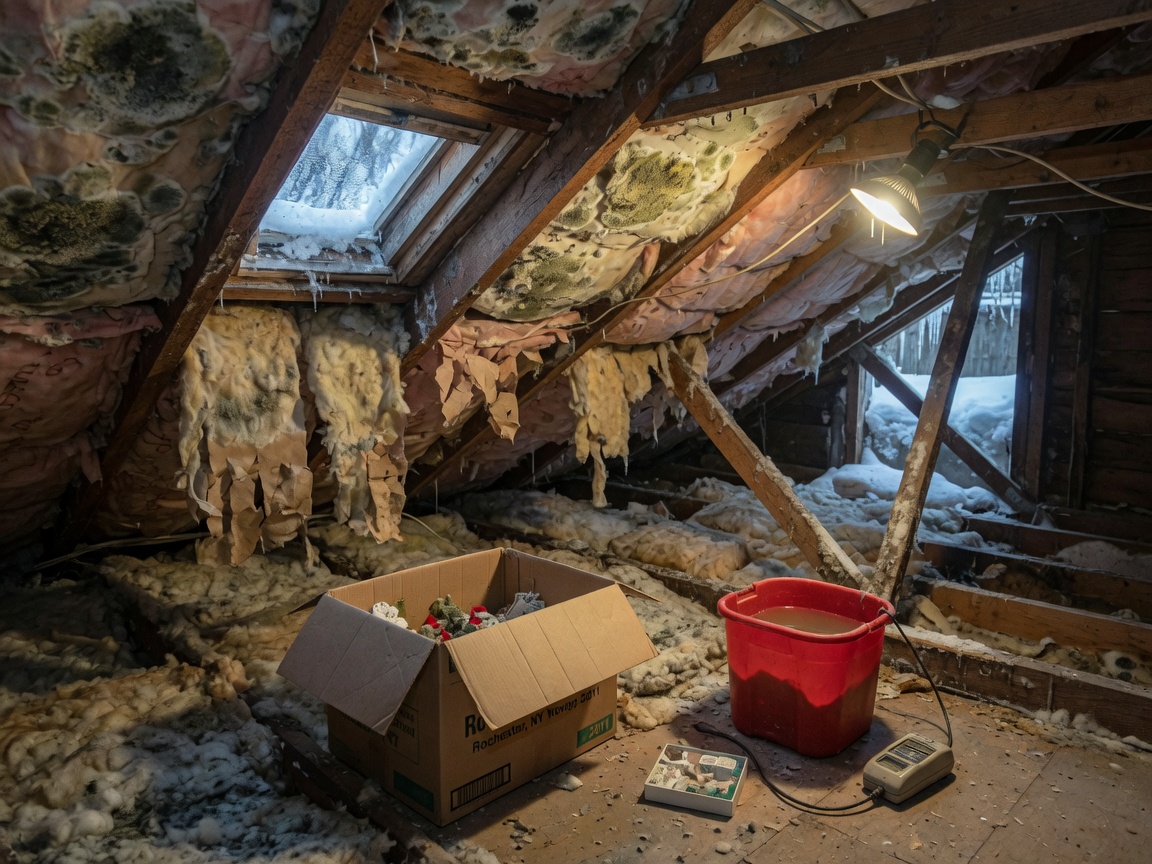
Attic mold returns in some Rochester homes because the first cleanup never stopped the moisture that feeds it—typically leftover roof leaks, ice-dam melt, unvented bathrooms, or dead attic air in older Monroe County houses. A surface wipe or a fogging pass can look clean for a season, then spores wake again once winter temperatures drop and snow sits on the roof for weeks. Homes along Park Avenue, East Avenue, and Charlotte see this cycle more often than newer stock because their attics were built for a different climate and rarely got a full air-and-water reset.
Incomplete Moisture Work After the First Cleanup
The most common reason mold comes back is that the water path was never mapped and closed. In Rochester’s humid continental winters, a small flashing gap at a chimney or a slow ice-dam drip can wet the same rafters every January. If the crew only treated visible growth and left the leak, cellulose or fiberglass will hold that dampness and the colony restarts. We see this after storms that dump snow on roofs near High Falls and along the lake-side streets in Charlotte, where wind-driven melt finds every weak seam.
A proper moisture source identification looks at gutters, ice dams, bathroom exhaust, and interior vapor drive—not just the stain on the sheathing. Skipping that step is why some owners in Brighton and Irondequoit call again the next spring. Hours here run Mon–Fri 8am–6pm and Sat 9am–2pm from 1925 S Clinton Ave, so winter call-outs can be scheduled before another freeze-thaw cycle locks water into the deck. Treating wood without drying it, or leaving wet insulation in place, almost guarantees a return within 6–18 months.
Ice Dams, Snow Load, and Roof Geometry
Rochester winters pile snow on low-pitch roofs and create ice dams that force melt water under shingles. That water soaks the attic edge, then freezes again, so the wood stays in the 60–80% moisture range mold loves. Older houses near the George Eastman Museum and along East Avenue often have short overhangs and clogged soffits, so the dam forms right above the wall line. Once that pattern is set, even a thorough attic mold remediation will fail if the roof edge is not opened and the ice-dam cycle is not broken.
Terrain and trees matter too. Dense canopy in parts of Pittsford and Park Avenue keeps roofs shaded and slow to dry after a thaw. Gutter ice and poor ice dam prevention keep feeding the same rafter bays. The job on the ground is not “more bleach”; it is heat-loss control at the ceiling, clear soffits, and sometimes a ridge vent so the deck can dry between storms. Until that winter physics is addressed, mold will return in the same 4–8 foot band along the eaves.
Stale Air and Missing Exhaust in Older Attics
Many Rochester attics were never designed for today’s sealed living space. Kitchen and bath fans that dump into the attic, or no fans at all, push humid air into a cold roof. In a closed-up house from the 1920s–1950s, that moisture condenses on the underside of the sheathing every time outdoor air drops. Charlotte and East Avenue homes with original plaster and little insulation show this as black staining on the north slope first. Without attic ventilation improvement, spores that survived the first cleaning have a perfect chamber to grow again.
Air sealing the hatch, boxing recessed lights, and routing exhaust outdoors are not extras—they are the difference between a one-time job and a yearly callback. We also see returns when owners add spray foam without checking existing wet wood; trapped moisture then blooms behind the foam. A mold prevention consultation after cleanup is how you confirm the attic can actually dry. Tree cover and lake-effect humidity around Rochester Public Market neighborhoods make this even more important: the air outside is often wet, so the attic must move air, not just sit still.
Insulation Left in Place After Growth
If moldy cellulose or fiberglass is bagged only in the worst spots and the rest is fluffed back, spores stay in the fibers. Rochester attics often have mixed layers from decades of top-offs. Leaving that material in place after a “clean” is a frequent reason growth reappears in 3–12 months, especially after a wet winter. Full removal and dry-in of the deck, then new insulation, is slower but it is what actually breaks the cycle. See replacing insulation after attic mold removal Rochester NY for how that sequence works on local houses.