
2026-09-03 ·
Attic Mold and Bathroom Fan Ductwork in Rochester Attics
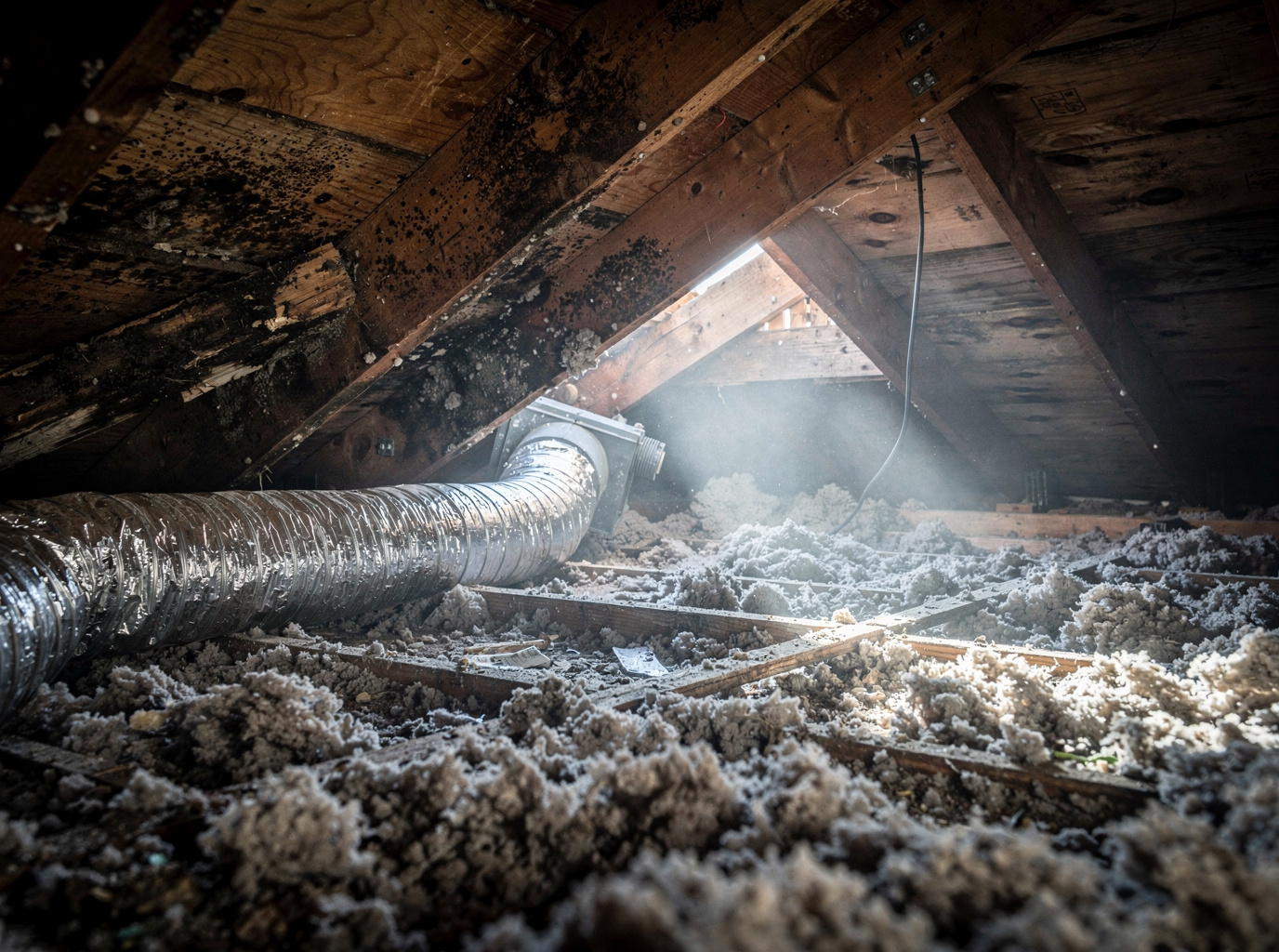
Bathroom fan ductwork that ends inside the attic—not through the roof or a gable—is one of the most common moisture sources behind attic mold in Rochester, NY. In Monroe County’s humid continental climate, a 4-inch flex run that dumps into the bays can add several pints of shower steam per day onto cold sheathing, especially once winter temperatures drop and snow sits on roofs from Park Avenue to Charlotte. Homes near the George Eastman Museum and along East Avenue often have 1920s–1950s framing with limited soffit intake, so that extra humidity condenses fast. Attic mold removal rochester ny work here almost always starts by tracing the fan, not just wiping black spots on the rafters.
How Bathroom Fans Dump Moisture Into Rochester Attics
Most older bathrooms in Brighton, Irondequoit, and Pittsford still use a cheap fan that was never ducted outdoors. The installer shoved a short piece of vinyl flex into the attic and left it. Warm, wet air hits 20–30°F roof decking on a January night and condenses. Cellulose or fiberglass then stays damp for days. That is why we see Cladosporium and Aspergillus on the north slopes first. A proper bathroom exhaust fan upgrade uses rigid or insulated flex, a roof or wall cap with a damper, and a slope that drains condensate out—not back into the attic. On East Avenue triples, the run often has to snake around chimneys; a 6-inch insulated duct with a 1/4-inch-per-foot pitch is the minimum that actually works. Leaving the old dump-in-place setup guarantees the next round of attic mold remediation after the next thaw.
Why Monroe County Winters Make Ductwork Failures Worse
Rochester’s cold snowy winters keep attic surfaces below the dew point for months. Ice dams along High Falls-area roofs and in Charlotte bungalows already push meltwater under shingles; bathroom steam on top of that is extra fuel. When the fan runs 20 minutes after a shower, the moisture load hits insulation that cannot dry until April. Spring thaw then reveals staining that started in December. Homes near Rochester Public Market with low-pitch roofs and little ridge venting suffer most because there is nowhere for the vapor to go. We map growth with a moisture meter and often find 18–22% wood moisture on the underside of the decking right above the fan termination. That is well above the 15% threshold where mold takes hold. Pairing duct correction with attic ventilation improvement and a look at spring thaw and attic mold in Monroe County keeps the same cycle from repeating.
Common Ductwork Problems in Park Avenue and East Avenue Homes
Walk an attic on Park Avenue and you will see the same three failures: crushed flex, disconnected joints, and a fan that vents into the insulation instead of a cap. Many 1930s colonials still have the original 3-inch metal that rusted through. In Irondequoit ranches the flex is often stuffed into a soffit that is already blocked by insulation. The result is steam that never leaves the building. We also find bathroom fans sharing a run with a kitchen hood—another local shortcut that overloads the duct. Fixing it means replacing the fan with a 80–110 CFM unit rated for continuous or humidity-sensing use, then running a dedicated 4- or 6-inch insulated line to a roof jack. That work is scheduled Mon–Fri 8am–6pm or Sat 9am–2pm from our shop at 1925 S Clinton Ave. Owners in Brighton who skip the termination and only treat the mold watch it return within 12–18 months.
What Proper Termination Looks Like on Rochester Roofs
A correct install ends with a roof or gable cap that has a backdraft damper and is flashed so snow melt cannot enter. The duct itself must be insulated to R-6 or better so the interior stays above dew point. We pitch it 1/4 inch per foot toward the exterior so any condensate drains out. On low-slope roofs common near Pittsford, a wall termination through a gable is often cleaner than a roof jack. Never terminate into a soffit; that just wets the fascia. After the duct is right, we still check for other sources—ice dams, plumbing vents, and missing vapor barriers—because one wet fan does not explain every stain. Moisture source identification and a follow-up post-remediation testing for attic mold Rochester NY confirm the attic is actually dry before insulation goes back. That sequence, not a fogger and a prayer, is what lasts through the next winter.
Steps to Correct Fan Ducts Before Mold Spreads
First, run the fan and feel for air at the supposed termination; if nothing moves, the duct is disconnected. Second, inspect the attic in daylight and look for dark rings in the insulation directly above bathrooms. Third, replace crushed vinyl with insulated flex or rigid pipe and add a proper cap. Fourth, upgrade the fan if it is under 50 CFM or lacks a humidity sensor. Fifth, improve intake and exhaust so the attic can dry. These steps cost less than repeating [attic mold removal rochester ny] work every other year. Locally owned crews who actually crawl these attics know the housing stock: balloon-framed Park Avenue houses, 1950s Irondequoit ranches, and Pittsford colonials all need slightly different routing. Do the duct first, then treat the growth. That order is the difference between a one-time job and a seasonal callback.