
2026-09-03 ·
Attic Mold and Solar Panel Installations in Rochester
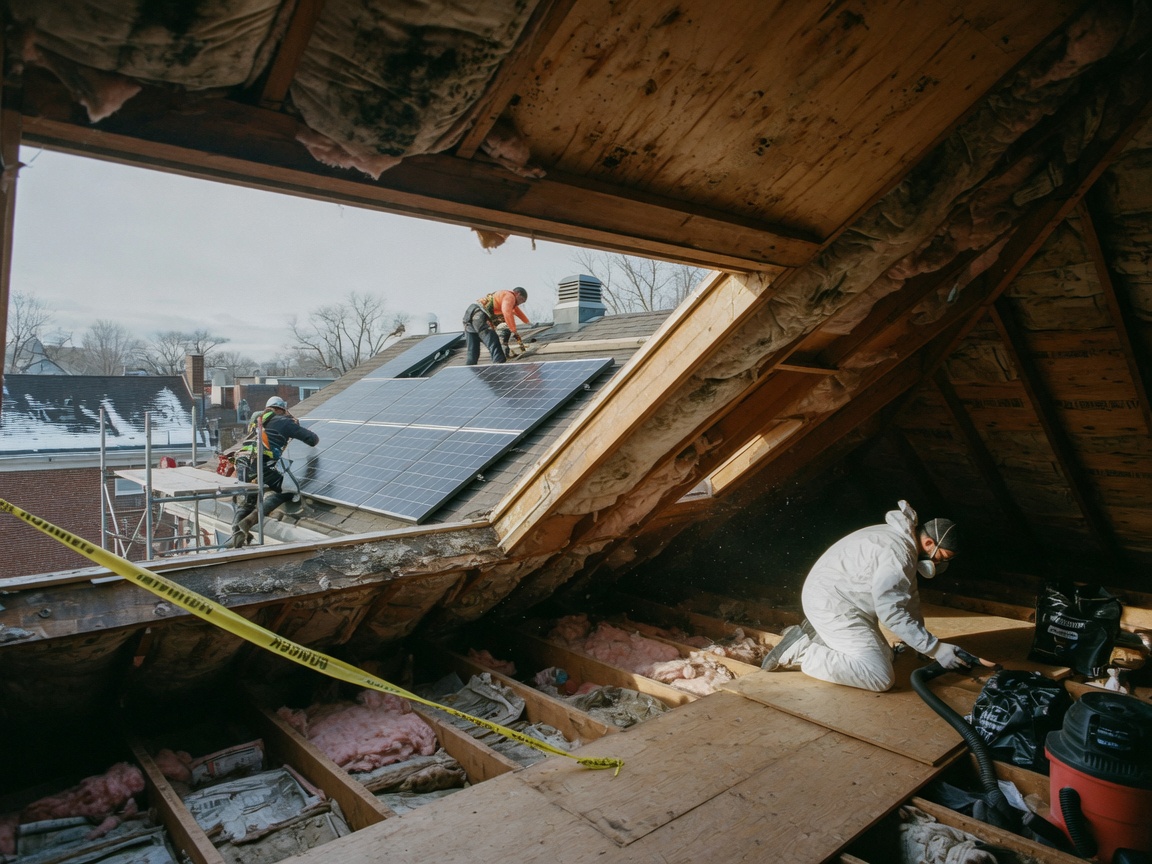
Installing solar panels on a Rochester roof does not automatically cause attic mold, but poorly flashed mounts, covered ridge vents, and changed snow-melt patterns often do in Monroe County’s older housing after a few cold, snowy winters. Homes along Park Avenue, East Avenue, and Charlotte frequently have 1920s–1940s roofs, thin original insulation, and limited soffit-to-ridge airflow. Add array penetrations and you get new leak paths plus cooler roof decks that hold winter moisture longer. The practical sequence is inspect and dry the attic first, then coordinate flashing and ventilation with the solar crew—not the other way around.
How Solar Mounts Interact With Rochester Attics
Most arrays in Brighton, Irondequoit, and Pittsford use lag-bolted rails through asphalt shingles into rafters. Each lag is a potential drip if the flashing boot is not seated for freeze–thaw. Rochester’s humid continental climate swings from wet spring thaws to deep winter freezes; water that sneaks past a mount can sit on the underside of the deck for weeks. In balloon-framed houses near the George Eastman Museum or along East Avenue, that moisture wicks down rafters into cellulose or fiberglass that was never designed for it. We routinely see staining starting 12–18 inches from a mount, not at the ridge. A pre-install attic mold inspection maps existing growth so you are not blaming new panels for old problems. After install, the same inspection confirms whether new penetrations stayed dry through the first melt. Coordination with the solar contractor on flashing height and sealant type matters more than brand of panel; a 1/4-inch gap under a rail can feed an entire bay of insulation once snow load compresses the shingles.
Winter Snow Load, Ice Dams, and Covered Ridges
Solar arrays change how snow sheds. Panels hold a blanket of snow that melts from the bottom on sunny days, then refreezes at the eave—classic ice-dam conditions on Monroe County roofs that already struggle with inadequate attic heat. When panels also cover or crowd a ridge vent, the attic cannot dump that moisture. Charlotte and Park Avenue bungalows with low-pitch roofs are especially vulnerable: 6–8 inches of packed snow plus an array can keep the deck below 32°F for days while indoor air still leaks upward. The result is condensation on the underside of the sheathing, then mold on the north slope first. Ice dam prevention work—air sealing, extra insulation at the eaves, and keeping the ridge clear—should happen before rails go down. After a heavy lake-effect event, walk the attic within 48 hours of the thaw; black spotting on rafters near mounts is the early warning, not a musty smell months later. Homes closer to High Falls and the river corridor often see slightly higher humidity, so the same snow load produces faster growth than in drier inland Pittsford lots.
Ventilation and Heat After the Array Is Live
A typical Rochester array shades 30–60% of the south or west roof. Summer attic temperatures drop, which is good for comfort, but winter solar gain on the remaining shingles also drops. That cooler deck plus reduced ridge exhaust is a mold-friendly combination once indoor humidity from showers and cooking reaches the attic. Many East Avenue and Brighton houses still rely on a couple of gable vents and a tired ridge; covering even part of that ridge without adding soffit intake or a powered fan tilts the balance. Attic ventilation improvement after solar is often a soffit-and-ridge redesign, not a bigger fan. We measure temperature and relative humidity at the peak and at the eaves on a 20°F day; if the peak stays within 5–8°F of outdoor air and RH stays under 50%, the array is not trapping moisture. If the peak is 15°F warmer and RH hits 60%+, the panels have effectively sealed a leaky old roof. That pattern shows up in Irondequoit ranches as often as in Park Avenue Victorians because both stocks were built before modern ventilation codes. Fix the air leaks at the attic floor first—can lights, bath fans, and the hatch—then revisit intake and exhaust so the solar roof can still breathe.
What To Check Before and After Installation
Before rails are set, document existing mold, wet insulation, and roof leaks with photos and moisture-meter readings at rafters, sheathing, and the chimney chase. Rochester Public Market–area and Charlotte cottages often hide old ice-dam stains under new shingles; solar will not cause those, but it will make them worse if ignored. After the array is live, re-check the same spots after the first significant thaw and again after a 3-day January freeze. Look for new staining within 6–12 inches of each mount, damp cellulose, and any change in ridge-vent airflow. If you smell must or see growth, stop and address moisture before more panels go up. A related read on spring thaw and attic mold in Monroe County covers the melt cycle that follows a solar winter. For Brighton and 14618 properties near our 1925 S Clinton Ave shop, we can walk the attic Mon–Fri 8am–6pm or Sat 9am–2pm to compare pre- and post-install conditions. The goal is a dry, inspectable attic that still ventilates after the array is producing—not a sealed, cooler box that grows mold behind the panels.