
2026-09-03 ·
Attic Mold in Rochester Homes With Metal Roofs
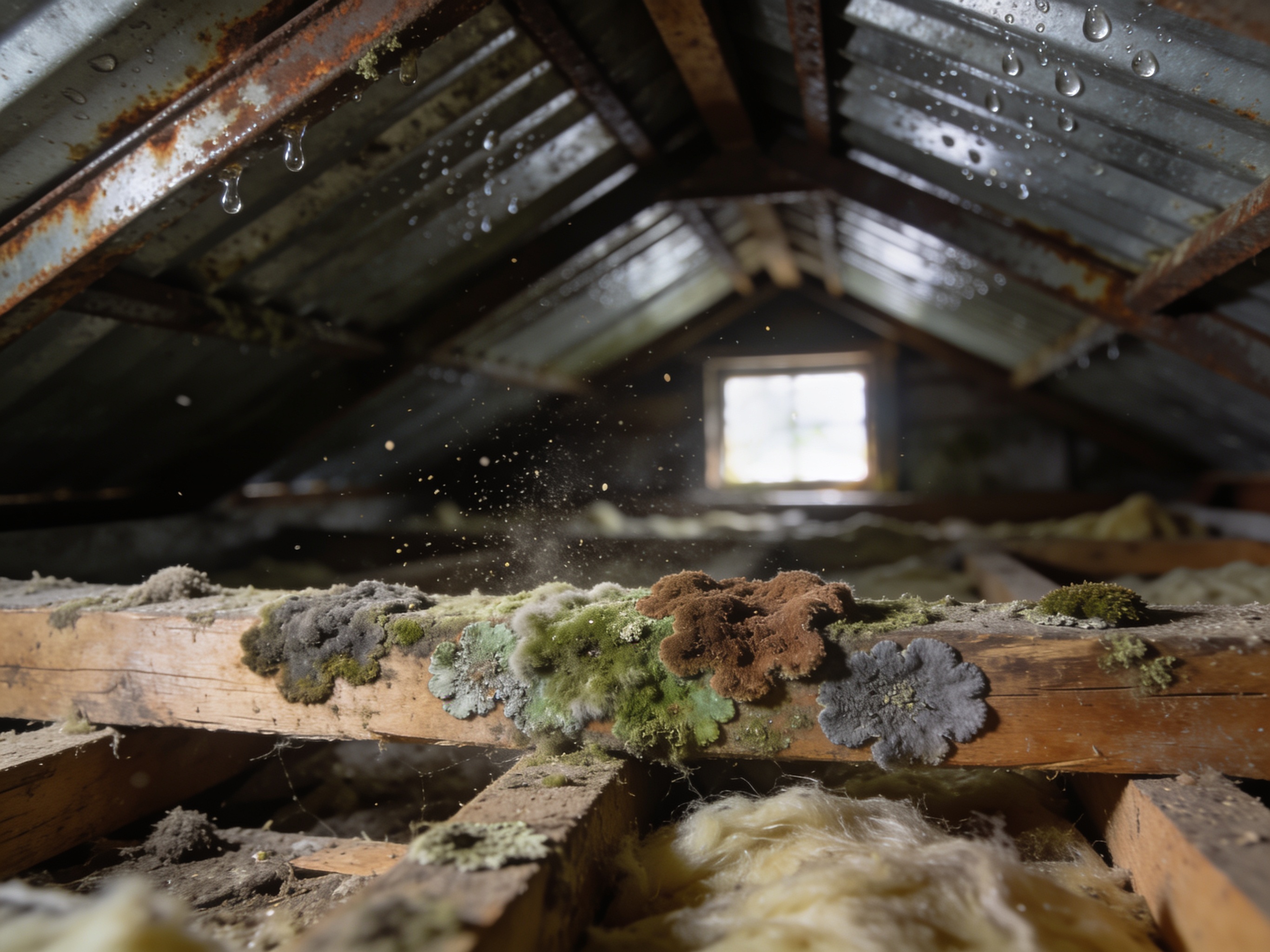
Metal roofs on Rochester homes do not stop attic mold; they often make winter condensation worse. In Monroe County’s humid continental climate, cold snowy winters drop attic temperatures so far that indoor air leaking past the ceiling plane hits dew point on the underside of metal panels faster than it would on asphalt. Older houses in Park Avenue, East Avenue, and Charlotte—and similar stock in Brighton, Irondequoit, and Pittsford—were built with little air sealing, so bathroom and kitchen moisture still rises into the attic. The result is mold on sheathing, rafters, and insulation even when the roof itself looks watertight from the street near High Falls or the George Eastman Museum.
Why Metal Panels Hit Dew Point So Fast Here
Standing-seam and screw-down metal stay colder than shingles because they have almost no thermal mass and radiate heat to the night sky. Once winter temperatures drop, the underside of those panels can sit well below the dew point of air that has leaked from living space. Rochester’s long snow season keeps attics cold for months, so that moisture does not dry out between storms. Ice dams still form at eaves when heat escapes, and meltwater can work under panels at seams or fasteners even if the metal itself does not rot. Homes near the lake-effect snow belt in Charlotte and Irondequoit see this cycle more often than inland Pittsford. Terrain is mostly glacial till with poor drainage in some lots, so ground moisture and high water tables add humidity that finds its way upstairs. The job on the ground is therefore not “the roof is metal so it is fine.” It is finding every air leak, every unvented bath fan, and every spot where insulation is compressed against cold metal. A thorough attic mold inspection maps those paths before anyone tears out wet cellulose.
Trouble Spots We See Under Rochester Metal Roofs
Fasteners, ridge caps, and chimney flashings are the usual first leaks. Older East Avenue and Park Avenue houses often have mixed roofing from past additions, so a metal plane meets an asphalt slope and ice builds at the joint. Soffits get blocked by paint or insulation, killing intake air that metal roofs need even more than shingles because the panels themselves do not breathe. Bath fans that dump into the attic instead of through the roof dump gallons of moisture onto cold metal every week. After a thaw, you can find black staining on the north slope sheathing and clumped fiberglass where condensation dripped for years. Ice dam prevention work and proper ridge vent installation matter here because metal sheds snow quickly until it hits a cold eave. We also see mold on the back of OSB where a previous owner added spray foam against the metal without sealing the ceiling below—trapping moisture between two impermeable layers. That pattern shows up in Brighton bungalows and Irondequoit capes as often as in city two-flats. The practical close is always the same: stop the air, then dry the wood, then treat what grew.
Housing Stock, Seasons, and What Changes the Job
Much of the housing around Rochester Public Market and along East Avenue dates to eras when attics were not designed as conditioned space. Balloon framing, knob-and-tube remnants, and original plaster ceilings leak air at every penetration. Metal retrofits on those roofs look modern from the curb but sit on the same leaky deck. Spring thaw in Monroe County—documented in our note on spring thaw and attic mold—releases months of stored ice and condensation at once, so mold colonies that looked dormant in February explode in March. Lake-effect snow loads Charlotte and Irondequoit harder than Pittsford, so ice dams and subsequent leaks are more frequent there. Soil is often clay-rich, so basement humidity adds to the stack effect that pushes moist air into the attic. None of that is fixed by “better metal.” It is fixed by sealing the attic floor, routing exhaust outdoors, and sometimes adding a dehumidifier only after the leaks are gone. When growth is already on the framing, attic mold remediation includes HEPA cleaning and wood treatment rather than a coat of paint. Owner-operated work from 1925 S Clinton Ave runs Mon–Fri 8am–6pm and Sat 9am–2pm so we can meet homeowners after a weekday storm or a Saturday inspection.
Stopping Recurrence Under Metal Without Guesswork
First find the moisture source—usually air leaks and unvented exhaust—not the panel color. Then dry the assembly with targeted air movement, not a whole-house blast that drives spores into living space. Remove wet insulation that will not recover, treat framing, and only then add ventilation that metal roofs actually use: continuous soffit intake and a clear ridge. Homes in Park Avenue and East Avenue often need soffit repair because decades of paint sealed the vents. After cleanup, verification sampling confirms the attic is back to outdoor spore levels. Prevention is air sealing, bath-fan upgrades, and watching humidity through the snow season rather than waiting for the next thaw. That sequence is what actually holds on Rochester metal roofs, from Charlotte bungalows to Brighton colonials, because the climate and the housing stock do not change just because the shingles were swapped for standing seam.