2026-09-03 ·
Attic Mold Removal Timeline for Rochester Homeowners
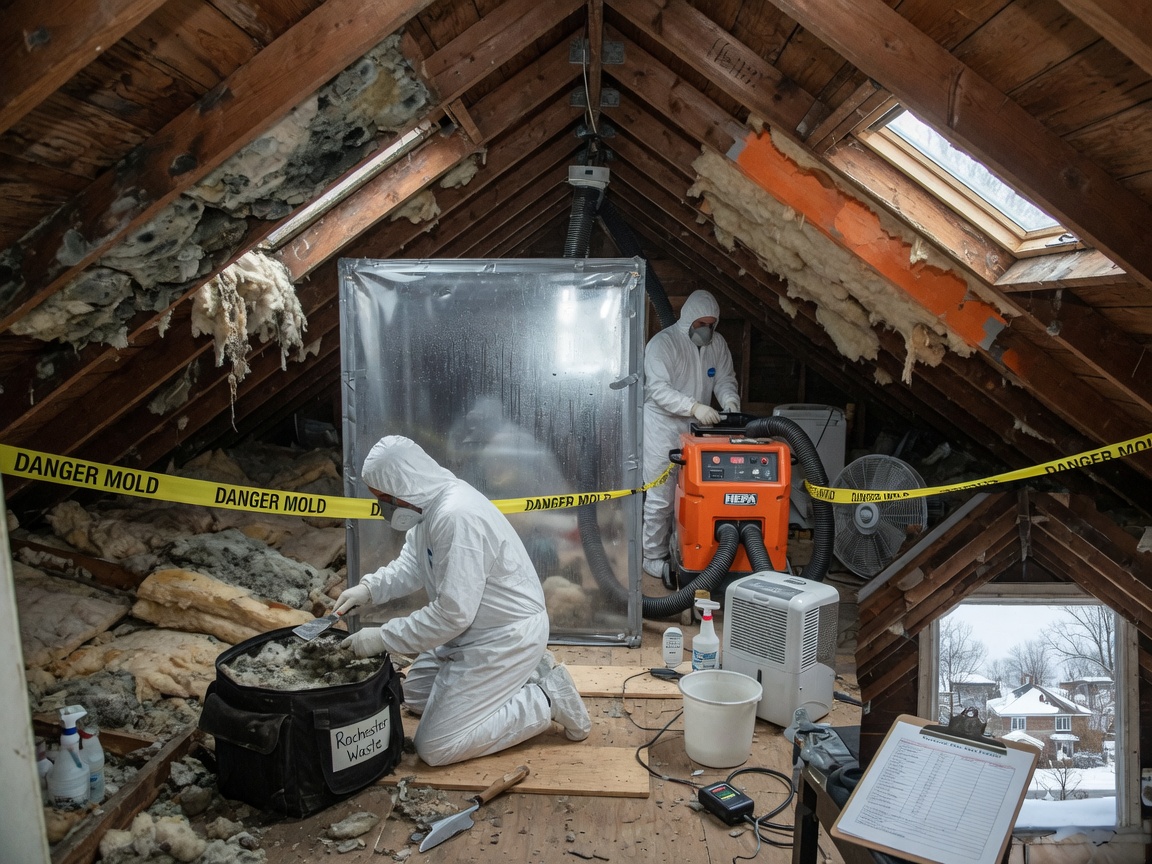
For most Rochester homeowners, attic mold removal takes 3–7 calendar days from first look to clearance, with 1–2 days of active work in the attic once moisture is stopped. Heavy lake-effect snow, ice dams, or soaked cellulose in a 1920s East Avenue or Park Avenue house can push the job to 8–10 days because wood and insulation must dry before treatment sticks. That range is what crews actually see across Monroe County, not a marketing promise.
Typical Day-By-Day Timeline After You Call
Day 0 is the call and scheduling. We work Mon–Fri 8am–6pm and Sat 9am–2pm from 1925 S Clinton Ave, so a weekday inspection in Brighton or Irondequoit often happens within 24–48 hours. Day 1 is the attic mold inspection: moisture meter readings on rafters, insulation depth, soffit and ridge vent condition, and photos of staining. If growth is obvious, containment planning starts the same visit. Days 2–3 are usually attic mold remediation: plastic isolation, negative air if needed, bagging wet cellulose, HEPA vacuuming, and antimicrobial treatment of framing. Day 4 is often drying and a second pass. Days 5–7 cover verification, new insulation if required, and a written close-out. Charlotte bungalows near the lake and Pittsford colonials with tight attics follow the same sequence; the extra days come from drying, not extra theater.
How Rochester Winters and Older Housing Change the Clock
Monroe County sits in a humid continental climate with cold, snowy winters. Once snow loads sit on roofs along East Avenue or Park Avenue, ice dams form at the eaves and meltwater backs under shingles into the attic. That moisture soaks cellulose and wets the underside of the roof deck. You cannot treat wet wood and expect the product to last, so structural drying can add 2–4 extra days after a thaw. Spring melt around High Falls and the Rochester Public Market corridor does the same thing: attics that looked dry in January show black staining by April. Older housing stock—many 1900–1940 homes near the George Eastman Museum and along East Avenue—still has original plaster, knob-and-tube remnants, and poorly baffled soffits. Those details slow bag-out and make it harder to keep spores out of living space. Terrain is modest, but low-slope roofs on 1920s houses hold water longer than a steep Pittsford colonial. None of that invents a longer job; it is simply why a January ice-dam case rarely finishes in 48 hours.
Inspection, Containment, and Removal Steps That Add Hours
A useful inspection is not a 20-minute glance. We map growth, check bathroom exhaust termination, and look for unsealed attic hatches that dump humid air into the rafters. That work is why Spring Thaw and Attic Mold in Monroe County matters: thaw water often hides until you lift insulation. Containment on a Park Avenue two-story means sealing the hatch, running negative air if the living space is occupied, and protecting stairs. Bagging wet cellulose is slow, dusty work; a 1,200-square-foot attic with 10–14 inches of packed cellulose can take a full day just to empty. Framing treatment and HEPA vacuuming follow. If black staining is heavy on the deck, we do not skip wood treatment. Homeowners sometimes ask why we cannot “spray and go.” Wet cellulose holds moisture for days; leaving it in place is how the same attic fails again after the next snow. Irondequoit and Brighton jobs follow the same physics. The clock is set by moisture, not by how fast someone can fog.
Drying, Treatment, and Verification Before You Close the Hatch
After removal, wood moisture content has to drop before we call the job done. In a cold Rochester attic that can mean dehumidifiers and air movers running 24–48 hours, sometimes longer if outdoor relative humidity stays high after a thaw. Antimicrobial on dry framing is a different product than a wet wipe. New fiberglass or a vapor-aware assembly goes in only after the deck is dry. Post-work verification—visual plus, when requested, air or surface sampling—usually happens on day 5 or 6. Skipping that step is how people get a second bill six months later. If you want numbers on what older homes typically cost, see Cost of Attic Mold Removal in Rochester NY Older Homes. The timeline and the bill move together: extra drying days are extra labor, not padding. Pittsford and Brighton houses with spray foam or tight envelopes can dry faster once the leak is stopped; 1920s Park Avenue attics with no baffles dry slower. Plan the hatch closed only after verification, not after the last bag leaves the driveway.
What Homeowners Should Plan For on the Ground
Block 3–7 days on the calendar and keep the hatch accessible. If ice dams or a roof leak started the problem, get the water stopped first or the clock restarts. Expect some noise and plastic on day 2–3, then quieter drying. We do not invent warranties or job counts; we do sequential work you can inspect: dry wood, treated framing, clean cavity, then insulation. Charlotte, East Avenue, and Monroe County suburbs all share the same winter moisture pattern. Call during posted hours if you want a weekday start. The useful takeaway is simple: the timeline is inspection, stop the water, remove wet material, dry, treat, verify. Rush the dry step and you buy the same job twice after the next snow.