
2026-09-03 ·
Attic Mold Removal When Recessed Lights Are Present
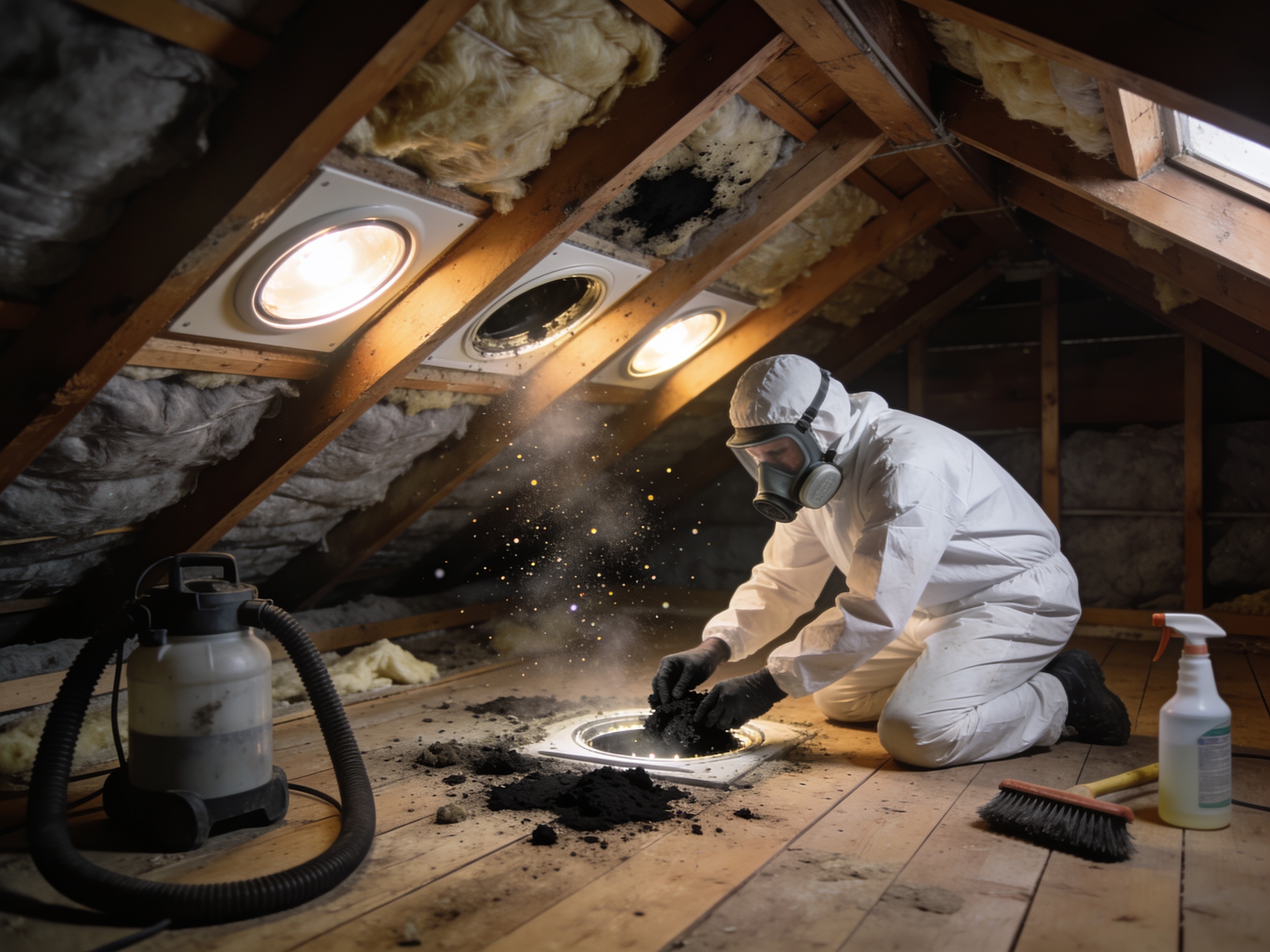
You can still complete attic mold removal when recessed lights are present; the job simply takes extra isolation around each can, typically 1–3 hours more per cluster of fixtures, and often adds $150–$400 depending on how many lights pierce the ceiling plane. In Monroe County houses from Park Avenue to Charlotte, those cans sit in the same plane as blown cellulose or fiberglass, so spores, dust, and wet insulation collect on the housings. We treat the lights as both a contamination path and a moisture path rather than a reason to skip the attic.
Why Recessed Lights Complicate Attic Mold Work in Monroe County
Rochester’s humid continental climate with cold snowy winters drives ice dams on older roofs in Irondequoit, Brighton, and Pittsford. Meltwater then finds the unsealed gaps around recessed cans and drips onto the backside of drywall and the fixture housings. Many East Avenue and Park Avenue homes still have original 1950s–1970s wiring and non-IC-rated cans, so heat from the bulbs plus attic humidity creates a micro-climate right at the ceiling. Mold colonies often start as a ring of staining around the trim ring downstairs while the real growth sits on the attic side of the can. Because the lights punch through the air barrier, any attic mold remediation has to treat the can as a penetration that must be contained, not just cleaned. We never assume the fixture is IC-rated until we read the stamp on the housing; guessing can melt insulation or start a fire. Terrain near High Falls and the Genesee corridor also means some attics sit over damp basements, so stack-effect air pulls spores toward those same light holes.
How We Isolate Cans Without Spreading Spores
Before any scraping or HEPA work, we map every recessed light from the living space and from the attic hatch. Each can gets a taped poly skirt that drops into the room so spores cannot fall onto furniture while we work above. In the attic we build a small negative-pressure envelope around clusters of fixtures using 6-mil poly and zipper doors, then run a HEPA air scrubber so the work zone stays under negative pressure. Wiring is traced back to the nearest junction; we never yank a can that still has live conductors. If the housing is rusted or the thermal cutoff has failed, we flag it for an electrician rather than forcing a mold-only fix. Surface growth on the metal is wiped with an EPA-registered antimicrobial after the loose debris is vacuumed; we do not fog blindly into an open can because overspray can short the socket. Homes near Rochester Public Market and the George Eastman Museum often have mixed vintage and remodel lighting, so we photograph each type before we start so the homeowner can see what was actually present.
Insulation, Wiring, and Ice-Dam Moisture Around Fixtures
Cellulose that has been wet from ice dams packs around the cans and stays damp long after the roof ice is gone. That packed material is a food source and a thermal bridge. We remove the contaminated insulation in a 24-inch radius around each fixture, bag it, and only then treat the wood and the metal. If the wiring insulation is cracked from heat, we stop and call for a licensed electrician; mold work does not include splicing 14-gauge runs. After the wood is dry we install new unfaced fiberglass or a sealed dam so the next winter’s melt cannot wick back into the same spot. Moisture source identification is part of every job because a leaking can is usually a symptom of a larger roof or ventilation problem, not a standalone light issue. In Charlotte and along East Avenue, many roofs still lack adequate soffit intake, so we also discuss ice dam prevention once the mold is gone. Recessed lights that were installed without airtight boxes remain the weakest point in the ceiling even after cleaning; we recommend IC-AT rated replacements when the homeowner is ready, but we never claim to be electricians.
Steps We Take on Park Avenue and East Avenue Homes
A typical sequence on a 1920s Park Avenue two-story starts with a visual and moisture-meter survey of every can, then containment, then insulation removal, then surface treatment of framing and housings, then drying, then new insulation dams. We work Monday–Friday 8am–6pm and Saturday 9am–2pm from 1925 S Clinton Ave so we can schedule around occupied rooms below the lights. If black staining is visible on the living-room side of the trim, we also address ceiling mold remediation from below after the attic side is clean, so the stain does not reappear. Related reading that matches this housing stock includes removing mold from attics in Rochester's brick row houses and dealing with attic mold near the Genesee River. We do not invent warranties or licenses; the work is owner-operated, quotes are written before we cut poly, and you can inspect the treated wood and the new dams before we close the hatch. Brighton and Pittsford clients often have newer IC-rated cans, which shortens the isolation step but does not remove the ice-dam moisture path. When the job is done we leave the attic drier and the cans isolated so the next snow season does not restart the same colony.