2026-09-03 ·
Testing Air Quality in Rochester Attics With Mold
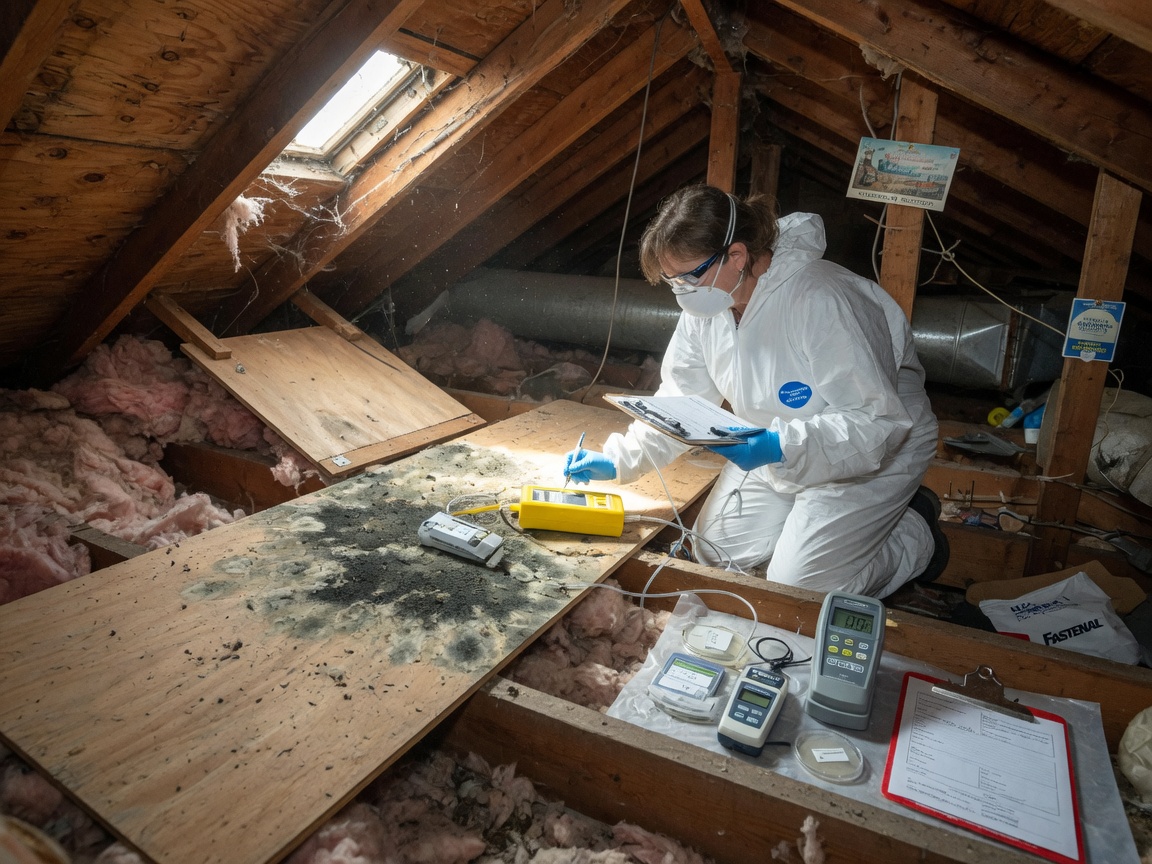
Testing air quality in a Rochester attic with mold starts with paired samples: one or more attic air cassettes plus an outdoor control taken the same hour. Labs then report total spore counts, typically in the 200–10,000 spores/m³ range indoors, and flag species that run 2–10 times higher than the outdoor baseline. In Monroe County that comparison matters because humid continental winters drive ice dams and condensation into older rafters on Park Avenue, East Avenue, and Charlotte streets, so visible growth on sheathing does not automatically mean living-space air is overloaded. A pump draws 75–150 liters over 5–10 minutes through a spore trap; results usually return in 24–72 hours and tell you whether Aspergillus, Penicillium, or Cladosporium from the attic is actually circulating downstairs.
Why Rochester Attics Need Air Quality Testing
Rochester’s housing stock—tight 1920s–1950s roofs near the George Eastman Museum, brick rows off East Avenue, and bungalows in Charlotte—holds moisture once winter temperatures drop and snow sits on the roof for weeks. Ice dams form along eaves, melt water backs under shingles, and cellulose or fiberglass insulation stays damp for months. That pattern is common from Brighton through Irondequoit and Pittsford. Air testing answers the question homeowners actually ask: is the mold staying in the attic or riding the stack effect into bedrooms? Outdoor spore loads around High Falls and the Rochester Public Market swing with leaf litter and lake-effect humidity, so a single indoor number is meaningless without the same-day outdoor sample. Testing also documents whether a prior leak or failed ridge vent has already seeded the living space, which changes the scope of any later attic mold inspection. Without that data, crews can over- or under-treat, leaving families guessing about indoor air after a long Monroe County winter.
How Air Sampling Is Done in Local Attics
On a typical job we set a calibrated pump on a stable rafter or the attic hatch, run a spore-trap cassette for 5–10 minutes at 15 liters per minute, then repeat at the living-space return and outside on the windward side of the house. We note temperature, relative humidity (often 40–70 % in unconditioned Rochester attics after a thaw), and whether the hatch is sealed. In homes with metal roofs or spray-foam, we add a second attic location because air movement is different. The outdoor control is taken within 30 minutes so weather—lake-effect snow or a sudden 20 °F swing—does not skew the comparison. Cassettes go to an AIHA-accredited lab; we never interpret “moldy smell” as a number. For clients who want counts rather than presence/absence, mold spore count testing is the same field protocol with a more detailed species breakdown. The whole visit, including photos of staining on the north slope (the side that stays wettest after lake-effect events), usually fits a weekday window of Mon–Fri 8am–6pm from our shop at 1925 S Clinton Ave.
Reading the Lab Report Against Rochester Conditions
A useful report lists total spores and the dominant genera. If attic Penicillium is 3,000 spores/m³ and outdoor air that morning is 400, the attic is amplifying; if both are 1,200, the source is likely regional pollen and leaf mold, not the roof. Cladosporium often tracks with damp insulation after ice-dam season; Aspergillus can appear after a slow leak around a chimney or skylight. We look at the ratio, not a magic “safe” number, because outdoor baselines in Monroe County jump after a wet spring or a heavy October leaf drop. Homes in Brighton and Irondequoit that sit lower and hold more snow on the north pitch frequently show higher indoor/outdoor ratios than houses on higher ground in Pittsford. The report also notes whether hyphal fragments (pieces of growing mold) are present; those fragments mean active growth, not just settled dust. That distinction decides whether you need containment and mold air sampling follow-up after cleaning, or simply better ventilation and a vapor check.
When Testing Comes After Visible Mold or Ice Dams
If you already see staining on the underside of the roof deck—common after the ice-dam cycle described in attic mold after ice dam removal in Rochester—air testing still has a job: it shows whether spores have already moved through the hatch or recessed lights. We sample before any disturbance so the numbers reflect the house as lived-in, not as a construction zone. After a thaw, attics in Charlotte and along East Avenue can sit at 60 % RH for days; that is when we prefer to test, because dry winter air can understate the load. If the family has allergy complaints only in upstairs rooms, we add a hallway sample to map the path. Testing is not a substitute for finding the water source, but it tells you whether the air in the rest of the house is already involved before anyone cuts into insulation or drywall. Results then guide whether a simple clean-and-dry is enough or whether full containment is warranted.
What Happens After You Have the Numbers
Once the lab sheet is in hand, the next conversation is practical: seal the hatch, add a ridge vent, or schedule targeted removal. If attic counts are high and living-space counts track them, we plan negative-air work and post-clean verification rather than a cosmetic wipe. If only the attic is elevated, the focus shifts to drying, insulation, and keeping the stack effect from pulling spores downstairs. Saturday hours (9am–2pm) exist for homeowners who cannot meet during the week; we still run the same pump protocol. The goal is a documented before-and-after so you are not guessing after the next lake-effect storm. Keep the outdoor control in mind every time—Rochester air is never “zero mold”—and treat the attic as part of the whole house envelope, not a separate box. That is how air-quality testing actually earns its keep in Monroe County attics.